Justia Rating Badge 10
Best DWI Attorney Top Rated 2017
Rated by Super Lawyers
Avvo Top Contributor in Criminal Defense 2013
Avvo 10.0 Superb - Top Criminal Defense Attorney
Top 10 Best Attorney Client Satisfaction - American Institute of Criminal Law Attorneys 2024
Avvo Client's Choice in Criminal Defense 2014
Avvo 10.0 Superb - Top Divorce Attorney
Avvo Top Contributor in Criminal Defense 2016
Rated by Super Lawyers
Top 10 Criminal Defense Law Firm 2023 - Attorney and Practice Magazines
Top 10 Criminal Defense Law Firm 2020 -  Attorney and Practice Magazines
Martindale-Hubbell - Distinguised Peer rated
Best of Springfield 2023 Winner - Illinois Times
Best of Springfield 2022 Winner - Illinois Times
The Official Community Choice Awards Springfield
The Official Community Choice Awards Springfield 2023
2022 Readers' Choice - The State Journal-Register
10 Best Attorney Client Satisfaction - American Institute of Criminal Law Attorneys
Elite Lawyer in Criminal Defense 2023
Lawyers of Distinction 2023
Best of the Best - Top 10 Criminal Defense Attorney 2024
Best of the Best - Top 10 Criminal Defense Attorney 2025
NACDA Top Ten Ranking 2025
5-Star Rating in Google
Avvo Excellent Top Attorney Criminal Defense DUI & DWI

What Does a Horizontal Gaze Nystagmus Test Look For?

W. Scott Hanken, Attorney at Law Team

If you are suspected of drunk driving, the officer will usually administer a field sobriety test. The horizontal gaze nystagmus test tracks a person’s eye movement while following an object, such as a pen. Certain involuntary jerking movements of the eyes during this test are thought to indicate intoxication, especially when other test results show the same. Here are a few cues officers look for when performing this field sobriety test.

The officer will begin by positioning the object in front of the driver’s line of vision from a certain distance. The driver will be instructed to follow the object visually as the officer moves it front of their face. Most sober people can track movement with their eyes in one smooth motion. Along with inebriation, certain medical conditions can impact smooth tracking, so officers are encouraged to ask drivers about their medical history before administering the test.

Officers move the object as far as possible to get a maximum extension of the person’s line of vision. This is known as maximum deviation, and when administering this portion of the test it is recommended that the object is held in place for at least four seconds. This accounts for any involuntary jerking caused by the rapid movement of the object.

Finally, the eyes should not exhibit involuntary movement before the object is at least forty-five degrees from the center of the person’s face. It is ultimately up to the officer to determine the proper angle, but even without precise measurement, it is considered a reliable factor when determining inebriation. In court, horizontal gaze nystagmus testing can be presented as proof of the established physical characteristics of drunkenness, or it can be considered scientific evidence.
Client Reviews

Mr. Hanken is the definition of a genuine person. My experience was nothing short of amazing. Scott made me comfortable and heard from the moment I walked into his office. He gave me back my reputation and dignity by receiving a not guilty verdict, but most...

Nena M.

Scott Hanken saved my life. Prior to this id not been in a situation where I'd needed a lawyer. Throughout the entire process he made sure I was aware of what was going on with my case, what my options were, and was always prompt. He delivered in everything...

Anonymous

If I could give Scott Hanken 6 stars I would, I called 2 weeks prior to my court date with multiple charges against me, He gave me a great price for his services and got my charges dropped. I would personally recommend him to anyone needing legal services.

Anonymous

Let's Put Up a Fight.

Fill out the contact form or call us at (217) 544-4057
to schedule your free consultation.

Leave Us a Message

Address

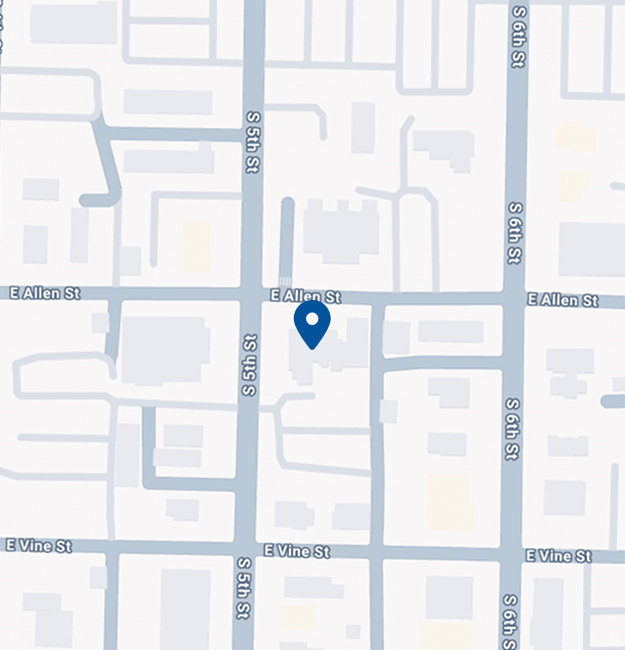
Our offices are located at the corner of South Fifth Street and Vine, in the historic Mary Bryant Home for the Blind.

Springfield Office
1100 S 5th St

Springfield, IL 62703