- Free Consultation: (217) 544-4057 Tap Here To Call Us











Illinois Joe Coleman Act: How a Petition for Medical Release Actually Works


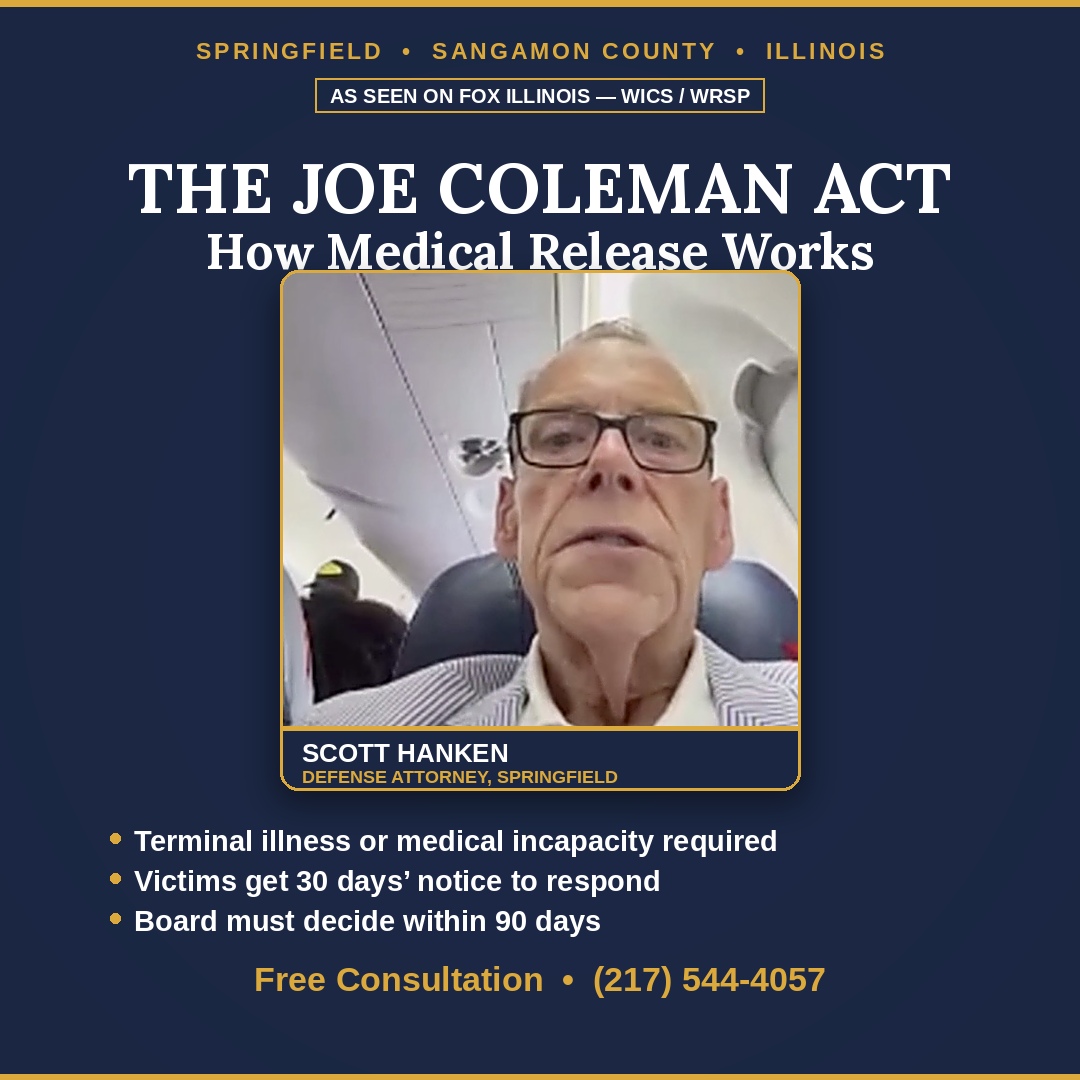
By: W. Scott Hanken Former Sangamon County Prosecutor | Springfield Criminal Defense & DUI Attorney |
Voted “Best Attorney” — Illinois Times Best of Springfield & State Journal-Register Reader’s Choice –
Springfield, IL • Sangamon County • (217) 544-4057 •hankenlaw.com
The short answer: Illinois’ Joe Coleman Act, also called the Medical Release Act, lets someone in custody petition for early release if they are terminally ill or medically incapacitated. A three-member Prisoner Review Board panel decides by simple majority, usually within 90 days. The underlying crime is not the focus. The medical facts are.
Why People in Springfield Are Searching This Right Now
The Joe Coleman Act has been quiet law for years. Then the Sean Grayson case put it on the local news.
Grayson, the former Sangamon County sheriff’s deputy convicted of second-degree murder for the 2024 killing of Sonya Massey in her Springfield home, was sentenced in January 2026 to 20 years in prison. His attorneys told the court Grayson is battling stage 4 cancer. By June 2026, reporting indicated Grayson may be pursuing early release tied to his health, though the Prisoner Review Board had not publicly confirmed exactly which type of hearing he was seeking.
I sat down with WICS/Fox Illinois to walk through how a Joe Coleman Act petition actually works, separate from the headlines. Questions started coming in almost immediately from people with their own incarcerated family members. So here is the breakdown, in plain terms. (Interview: foxillinois.com — “The Joe Coleman Act: How a Petition for Medical Release Works,” June 19, 2026.)
What the Law Actually Requires
The Medical Release Act took effect January 1, 2022. It is codified at 730 ILCS 5/3-3-14. It applies to anyone in Illinois Department of Corrections custody who meets one of three categories:
- They are suffering from a terminal illness expected to cause death within 18 months
- They have been diagnosed with a condition that will cause medical incapacity within the next 6 months
- They have become medically incapacitated since sentencing, due to illness or injury
“Medically incapacitated” has a precise legal meaning. It generally requires that the person cannot complete more than one activity of daily living without help, and that the condition is not expected to improve.
How the Process Moves
A petition can be filed by the person in custody, a family member, prison staff, or their attorney. Once filed, the Board orders a medical evaluation. That evaluation has to come back within 10 days, covering diagnosis, prognosis, and likelihood of recovery.
If the petitioner clears that threshold, things move into public view. Crime victims and the original prosecutor get 30 days’ notice and the right to speak at a hearing. That hearing happens in front of a three-member panel of the Prisoner Review Board, and a decision requires only a simple majority. The whole thing has to wrap up within 90 days of the completed application.
Grant the petition, and the person does not just walk free with no oversight. They go onto mandatory supervised release for five years.
What Often Gets Missed
People assume this is some kind of compassionate loophole around the crime itself. It is not built that way. As I told Fox Illinois, the underlying offense is not the centerpiece of the Board’s decision. The medical facts are. That said, the Board can weigh other factors too, including public safety risk and whether the victim’s family objects.
These petitions are also rare. Most incarcerated people facing serious illness never file one, often because they do not know it exists or do not have anyone to help them navigate the paperwork and the 10-day evaluation clock.
I have had calls on both sides of this. Family members of an aging or seriously ill loved one in custody, asking whether their situation even qualifies. I have also had calls from people on the victim side, wanting to know what notice they are legally entitled to and whether they actually get a say. Both groups usually need the statute walked through line by line, because the deadlines move fast once a petition is filed.
Frequently Asked Questions (FAQs)
Q: Does the Joe Coleman Act apply to every prison sentence in Illinois?
A: Yes. It applies retroactively to anyone currently in Illinois Department of Corrections custody, regardless of when they were sentenced or what they were convicted of.
Q: Who can file a medical release petition on someone’s behalf?
A: The petitioner themselves, a spouse, parent, grandparent, sibling, adult child, an attorney, prison medical staff, or a prison official can file.
Q: How fast does a decision have to happen?
A: The Prisoner Review Board must decide within 90 days of receiving a completed application, including the 10-day medical evaluation window built into that timeline.
Q: Do crime victims get to weigh in?
A: Yes. Victims and prosecutors receive 30 days’ notice once a petition is filed and can speak at a public hearing unless the petitioner requests a closed one.
Q: What happens after a petition is granted?
A: The person is released, but not unconditionally. They serve five years of mandatory supervised release, which functions similarly to parole supervision.
If You’re Facing This in Sangamon County
Whether you are trying to file a petition for a family member or you are a victim’s family wondering what your rights are, this is not a process to navigate alone. The deadlines are short and the medical documentation has to be airtight. If you have questions about how the Joe Coleman Act applies to your situation, or about violent crime charges more broadly here in Sangamon County, call my Springfield office at (217) 544-4057 for a free consultation.
Related Reading on the Hanken Law Blog
“Illinois SAFE-T Act: What Happens at a Detention Hearing in Springfield”
“Understanding the Illinois Clean Slate Act in Springfield”
“Does It Matter Whether Your Criminal Defense Lawyer Lives and Works Here in Springfield?”
Ready to Fight Your Criminal Charge in Springfield?
Call W. Scott Hanken at (217) 544-4057 or contact us online for a free consultation. We serve clients throughout Springfield, Sangamon County, and Central Illinois.
About the Author: W. Scott Hanken, Attorney at Law
Scott Hanken is a Springfield, Illinois criminal defense attorney with over 37 years of experience, including service as a former Sangamon County prosecutor. He has been voted Best Attorney by the Illinois Times and State Journal-Register, holds an Avvo 10.0 “Superb” rating, and has earned over 190+ five-star Google reviews. His firm handles DUI defense, drug crimes, traffic violations, violent crimes, and weapons offenses throughout Sangamon County and Central Illinois.
📍 1100 S 5th St, Springfield, IL 62703 | ☎ (217) 544-4057 | 🌐 hankenlaw.com
This article is for general educational purposes only and does not constitute legal advice. Every case is unique — contact an experienced Springfield criminal defense attorney for guidance on your specific situation.
Address
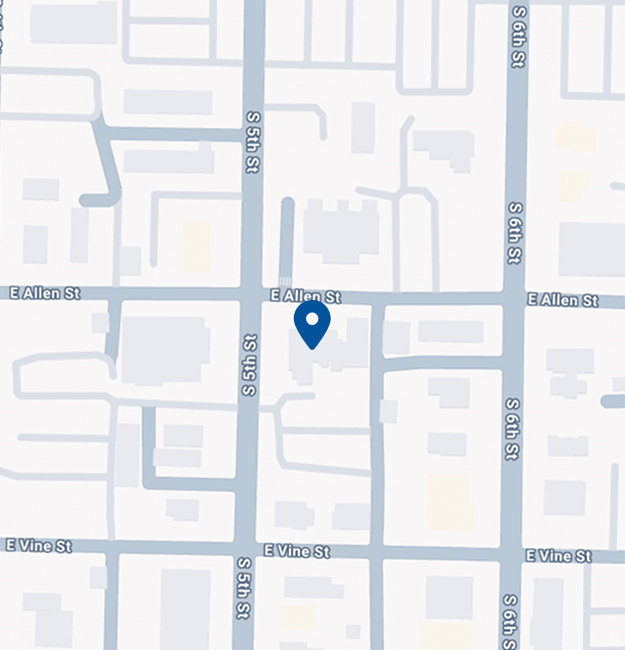
Our offices are located at the corner of South Fifth Street and Vine, in the historic Mary Bryant Home for the Blind.