

I Am a Former Prosecutor Who Will Fight for Your Rights












Probation Violation Defense
When a Violation Puts Your Freedom Back on the Line
Being accused of violating probation isn’t the same as a new criminal charge — but it can put you back in front of a judge facing the full range of penalties from your original case, including prison time that was suspended the first time around. Whether it’s a missed check-in, a failed drug test, or a new arrest, how you respond in the days after a violation is filed often matters as much as the violation itself. As a former Sangamon County prosecutor, Scott Hanken has handled these hearings from both sides of the courtroom.
📞 Call (217) 544-4057 for a Free, Confidential Consultation
A Former Prosecutor on Your Side
A probation violation hearing isn’t a criminal trial, and it doesn’t follow the same rules — which is exactly why having a lawyer who understands the difference matters. The State’s burden of proof is lower here than at trial, and the outcome can affect not just this case, but whether the sentence you avoided the first time gets imposed after all. Attorney Hanken’s background as a prosecutor means he knows how these petitions get built and where they’re often weakest.
What Counts as a Probation Violation
Violations generally fall into two categories, and the distinction matters for how the case is likely to unfold.
- Technical violations — missing a scheduled check-in with your probation officer, failing a drug or alcohol test, missing curfew, not completing court-ordered classes or community service, or falling behind on required fees or restitution.
- Substantive violations — being arrested for or charged with a new criminal offense while on probation. These are treated more seriously, since they suggest the underlying goal of probation — rehabilitation without incarceration — isn’t being met.
Either type can result in a petition to revoke your probation, but substantive violations involving a new charge typically move on a stricter timeline and carry higher stakes.
How a Violation Case Begins: Notice, Summons, or Warrant
Once a petition alleging a violation is filed, Illinois law gives the court three ways to bring you back before it — and which one is used often signals how seriously the violation is being treated.
Under 730 ILCS 5/5-6-4, the court can:
- Issue a notice through the probation department directing you to appear
- Order a summons requiring your appearance at a hearing
- Issue an arrest warrant — used when there’s a risk you’ll flee the jurisdiction, a concern about harm to others, or if you failed to respond to an earlier summons or notice
An important detail most people don’t expect: once the petition is filed and served, or the warrant, summons, or notice is issued, your probation clock stops running until the violation is fully resolved. It doesn’t continue counting down in the background while the case is pending.
The Hearing Process and Your Rights
A probation revocation hearing looks like a trial in some ways, but the rules are meaningfully different — and understanding exactly how is where a lawyer earns their value.
- The burden of proof is lower. At a criminal trial, the State must prove guilt beyond a reasonable doubt. At a probation violation hearing, the State only has to prove the violation by a preponderance of the evidence — meaning it’s more likely than not that the violation occurred.
- You still have real rights. The hearing is held in open court, and you’re entitled to confront and cross-examine witnesses against you, and to be represented by counsel.
- Pretrial release generally applies, unless the alleged violation is itself a new criminal offense, in which case separate bail rules under the Code of Criminal Procedure apply instead.
- If you’re held in custody solely because of the alleged violation, the law requires your hearing to happen within 14 days of when that custody began. If the violation is also a new criminal charge, different statutory timing rules apply instead.
Can I Be Revoked for Not Paying Fines?
Not automatically — and this is one of the more important protections in the statute. Illinois law specifically prohibits revoking probation solely for failing to meet a financial condition, like paying fines, fees, or restitution, unless the failure to pay was willful. If you genuinely couldn’t afford to pay, that’s a real defense, not just a mitigating factor — but it has to be raised and proven at the hearing, not assumed by the court.
What Happens If the Court Finds a Violation
A finding of violation doesn’t necessarily mean the harshest outcome — but the range of what a judge can do is wide, and includes the possibility of full re-sentencing.
If the court finds a violation occurred, it generally has two paths available:
- Continue you on probation, with the same conditions or modified ones — which is a common outcome for a first, minor, technical violation
- Impose any sentence that was legally available at your original sentencing — which can mean the prison or jail term that was suspended when you were originally placed on probation
There’s also a less-adversarial option built into the law: instead of filing a formal violation, your probation officer can offer a Notice of Intermediate Sanctions — a set of consequences you can accept without a full revocation hearing. If you complete those sanctions successfully, the court cannot later revoke your probation for that same violation. This option isn’t available for violations serious enough to support a separate felony charge.
Why You Need an Attorney at This Stage
Because the burden of proof is lower and the hearing moves faster than a criminal trial, probation violation hearings are often treated as a formality — by everyone except the person whose freedom is actually on the line. An attorney can challenge whether the alleged violation actually occurred, argue for intermediate sanctions instead of revocation, raise a willful-nonpayment defense where it applies, and make the case for continuing probation rather than re-sentencing when a violation is found.
Frequently Asked Questions (FAQs)
What’s the difference between a technical and substantive probation violation?
A technical violation involves failing to meet a condition of probation — missing a check-in, failing a drug test, falling behind on fees. A substantive violation means you were arrested for or charged with a new criminal offense while on probation, which is treated more seriously.
Can I go to jail for missing a probation check-in?
It’s possible, but a single missed check-in — a technical violation — is often resolved through continued probation or intermediate sanctions rather than full revocation, especially for a first-time issue. Repeated or combined violations increase the risk of a harsher outcome.
What standard of proof does the State have to meet to prove a violation?
The State must prove the violation by a preponderance of the evidence — meaning it’s more likely than not that it happened. This is a lower standard than the beyond-a-reasonable-doubt standard used at a criminal trial.
Can my probation be revoked if I can’t afford to pay fines or restitution?
Not if the failure to pay wasn’t willful. Illinois law specifically protects against revocation based solely on an inability to pay, but this defense has to be raised and proven at the hearing.
What happens at a probation revocation hearing?
The hearing is held in open court. The State presents evidence of the alleged violation, and you have the right to cross-examine witnesses and be represented by counsel. If the court finds a violation occurred, it can continue your probation, modify its conditions, or impose the original sentence you avoided.
Do I have the right to a lawyer at a probation violation hearing?
Yes. Illinois law specifically guarantees representation by counsel at these hearings, along with the right to confront and cross-examine the evidence against you.
More on Probation Violation Defense from Our Blog
As we publish more on probation violations and revocation hearings, you’ll find it in our Probation Violation Defense blog category.
Schedule Your Free Consultation
A probation violation petition moves on its own timeline, and if you’re in custody because of it, the law only guarantees a hearing within 14 days — there isn’t much time to build a defense from scratch. The sooner an attorney is involved, the more options stay available.
Call W. Scott Hanken at (217) 544-4057 or contact the office online to schedule a free, confidential consultation. The firm serves clients throughout Springfield, Sangamon County, and Central Illinois.
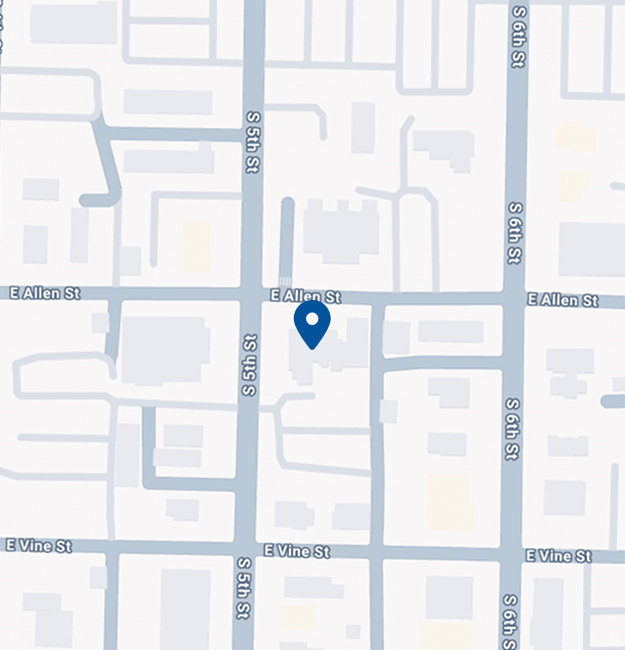
📍 1100 S 5th St, Springfield, IL 62703 ☎ (217) 544-4057 🌐 hankenlaw.com
This page is for general informational purposes only and does not constitute legal advice. Every case is unique — contact W. Scott Hanken directly for guidance on your specific situation.
Address
Our offices are located at the corner of South Fifth Street and Vine, in the historic Mary Bryant Home for the Blind.