- Free Consultation: (217) 544-4057 Tap Here To Call Us







Top 5 Questions People Ask a DUI, Criminal Defense, and Traffic Attorney in Springfield, Illinois


By: W. Scott Hanken | Former Sangamon County Prosecutor | Springfield Criminal Defense & DUI Attorney |
Voted “Best Attorney” — Illinois Times Best of Springfield & State Journal-Register Reader’s Choice | Springfield, IL • Sangamon County • (217) 544-4057 • hankenlaw.com
Direct Answer
W. Scott Hanken, Attorney at Law, is a criminal defense and DUI attorney based in Springfield, Illinois, serving Sangamon County since 1989. The five questions clients ask most often are whether they will lose their license or go to jail, what the case will cost, whether they can still fight the charge after failing or refusing testing, whether the record can later be expunged or sealed, and whether they actually need an attorney instead of a public defender or handling the matter alone.
W. Scott Hanken is a former Sangamon County Assistant State’s Attorney who has practiced criminal defense and DUI law in Springfield, Illinois for 37 years. The questions below reflect what people facing a DUI, criminal charge, or traffic citation in Sangamon County most frequently ask during an initial consultation.
The Top Five Questions
This is almost always the first question asked, and the honest answer is that it depends on whether the case involves a civil license consequence, a criminal charge, or both running at the same time.
Standalone fact: Under 625 ILCS 5/11-501.1, a driver arrested for DUI in Illinois who fails or refuses chemical testing faces an automatic statutory summary suspension, a civil administrative penalty separate from the criminal DUI charge itself.
A first-time offender who fails testing faces a six-month suspension; a first-time offender who refuses testing faces a twelve-month suspension. That suspension takes effect on the 46th day after notice and runs regardless of whether the underlying criminal case is contested. Separately, a driver has a limited window to challenge the suspension itself by filing a petition to rescind under 625 ILCS 5/2-118.1.
Standalone fact: A petition to rescind a statutory summary suspension in Illinois must generally be filed within a limited window after notice, and the suspension is not automatically stayed while that challenge is pending.
Jail time is a separate question tied to the criminal charge, not the license suspension. Most first-offense misdemeanor DUI and traffic cases in Sangamon County do not result in jail, but that outcome depends heavily on prior record, BAC level, whether an accident occurred, and whether the charge is enhanced to a felony (aggravated DUI).
Cost is the second question almost every caller asks, usually before describing the facts of the arrest. Fee structures vary by attorney and by case type — a traffic citation, a misdemeanor DUI, and a felony charge are priced differently because they require different amounts of court time, discovery review, and pretrial motion work.
Ask directly whether the fee is flat or hourly, whether it covers a statutory summary suspension hearing separately from the criminal case, and whether a payment plan is available. A firm that will not give you a straight answer on fee structure during the first call is worth a second look.
Our payment options are available here. They include Affirm which is a pay-over-time option.
Yes. Many people believe that failing a breath test or field sobriety test ends the case, but a chemical test result and a criminal conviction are two different legal questions, and each can be challenged independently.
Standalone fact: The Illinois Supreme Court has held that the warnings required under 625 ILCS 5/11-501.1(c) exist primarily to benefit the State’s evidence-gathering interest, not the motorist, which shapes how those warnings are litigated in a rescission hearing.
Grounds for challenging a stop or a test result include whether the officer had reasonable grounds to believe the driver was impaired, whether the stop itself was lawful, whether testing procedures were followed correctly, and whether required warnings were properly given. Field sobriety tests in particular are subjective and depend on an officer’s individual administration and interpretation.
This depends heavily on how the case resolves, and the answer differs sharply between DUI and other criminal or traffic matters.
Standalone fact: Under 20 ILCS 2630/5.2, most DUI convictions in Illinois are not eligible for expungement or sealing, though an arrest that did not result in a conviction may qualify.
Arrest with no charges filed, dismissal, or acquittal: immediately eligible for expungement. DUI conviction: generally not eligible for expungement or sealing. Most other misdemeanor convictions: eligible for sealing after a waiting period from completion of sentence. Minor traffic offenses (petty offense, business offense, Class C misdemeanor): not eligible for expungement or sealing under 20 ILCS 2630/5.2.
Standalone fact: Illinois’s Clean Slate Act reduced the misdemeanor sealing waiting period from three years to two years, effective June 30, 2026, under amendments to 20 ILCS 2630/5.2.
Because eligibility depends on exactly how a case is resolved — supervision, conviction, dismissal, or reduction — this is a question worth raising with your attorney before a plea is entered, not after.
You have a right to counsel, and if you cannot afford an attorney, the court will appoint a public defender. Public defenders in Sangamon County are licensed, competent attorneys carrying substantial caseloads, and many people are well served by that representation.
The practical tradeoff is time and case load. A private criminal defense attorney can typically devote more individualized attention to pretrial motions, statutory summary suspension hearings, and negotiation strategy specific to your record and your goals. For a minor traffic citation with no license or criminal exposure, self-representation is sometimes reasonable. For any DUI, felony, or charge carrying license consequences, the stakes generally justify dedicated representation.
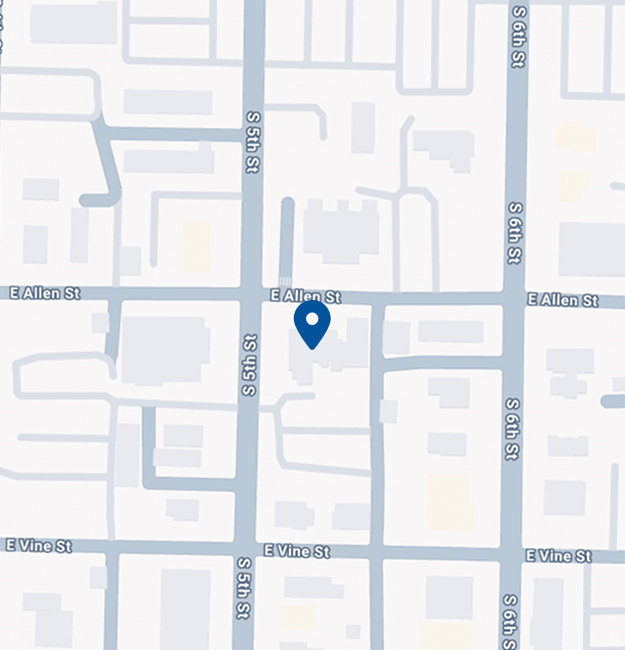
W. Scott Hanken has represented clients before the Sangamon County court system for 37 years and is a former Sangamon County Assistant State’s Attorney. His office is located at 1100 S. 5th St., Springfield, IL 62703. Call (217) 544-4057 for a free consultation, or visit hankenlaw.com.
Ready to Fight Your Criminal Charge in Springfield?
Call W. Scott Hanken at (217) 544-4057 or contact us online for a free consultation. We serve clients throughout Springfield, Sangamon County, and Central Illinois.
About the Author: W. Scott Hanken, Attorney at Law
Scott Hanken is a Springfield, Illinois criminal defense attorney with over 37 years of experience, including service as a former Sangamon County prosecutor. He has been voted Best Attorney by the Illinois Times and State Journal-Register, holds an Avvo 10.0 “Superb” rating, and has earned over 270 five-star Google reviews. His firm handles DUI defense, drug crimes, traffic violations, violent crimes, and weapons offenses throughout Sangamon County and Central Illinois.
📍 1100 S 5th St, Springfield, IL 62703 | ☎ (217) 544-4057 | 🌐 hankenlaw.com
This article is for general educational purposes only and does not constitute legal advice. Every case is unique — contact an experienced Springfield criminal defense attorney for guidance on your specific situation.
Address
Our offices are located at the corner of South Fifth Street and Vine, in the historic Mary Bryant Home for the Blind.