- Free Consultation: (217) 544-4057 Tap Here To Call Us















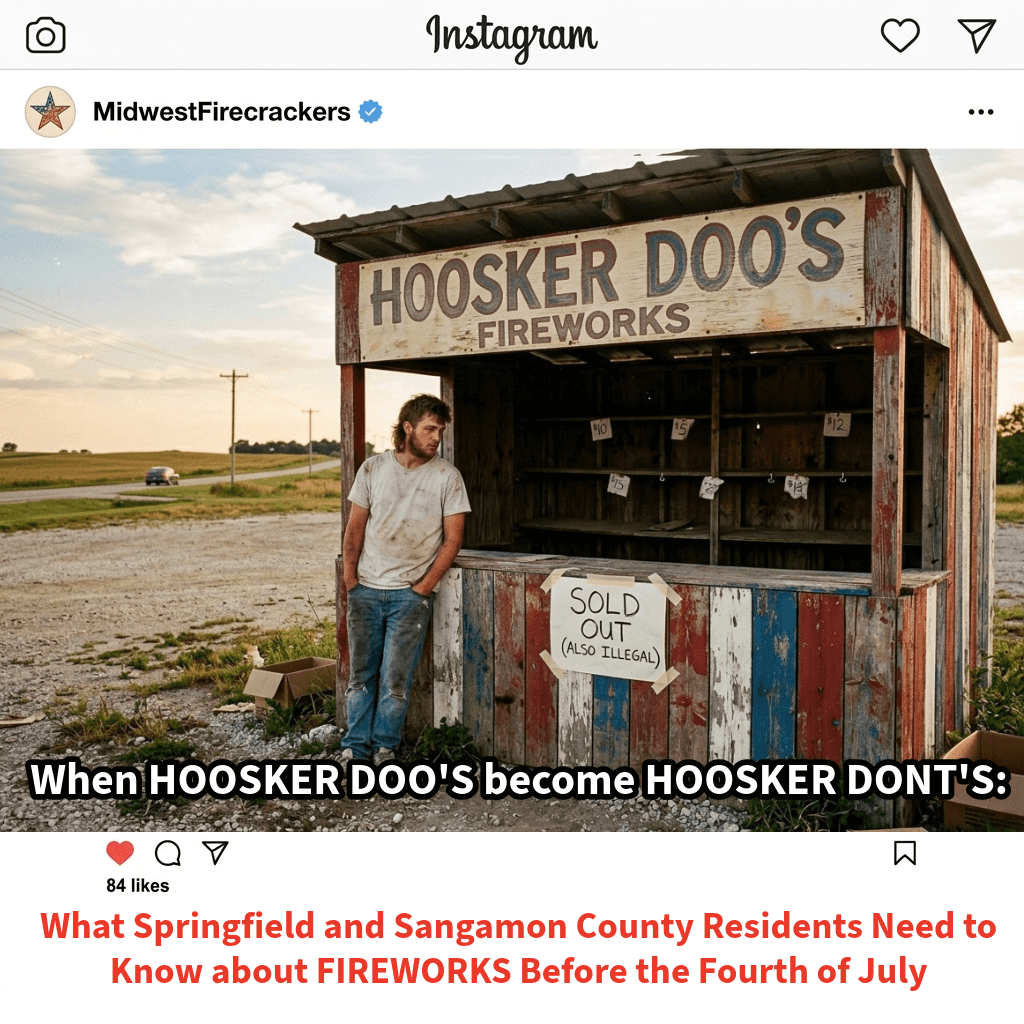
When HOOSKER DOO’S become HOOSKER DONT’S: What Springfield and Sangamon County Residents Need to Know about FIREWORKS Before the Fourth of July


By: W. Scott Hanken | Former Sangamon County Prosecutor | Springfield Criminal Defense & DUI Attorney |
Voted “Best Attorney” — Illinois Times Best of Springfield & State Journal-Register Reader’s Choice | Springfield, IL • Sangamon County • (217) 544-4057 • hankenlaw.com
Short answer: Most fireworks are illegal in Illinois — and in Springfield, the ban goes further than state law. Possession, use, or sale of prohibited fireworks is a criminal offense, not a civil fine. Here is what you need to know.
Every summer, Sangamon County law enforcement fields complaints about fireworks. Neighbors igniting what they bought across the state line in Indiana. Kids lighting firecrackers in local parks. Someone setting off a Roman candle in their backyard. Most of the people doing it have no idea they are committing a criminal offense under Illinois law — not just violating a nuisance ordinance.
Long story short, Joe Dirt would not dig Illinois laws regarding fireworks. I would imagine if Joe had a conversation with Illinois Law, it would go a little something like this:
Joe Dirt: “So you’re going to tell me that you can’t have no black cats, no roman candles, or screaming mimis?”
Illinois Law: “No.”
Joe Dirt: “Oh come on, man. You can’t have no lady fingers, buzz bottles, snicker bombs, church burners, finger blasters, gutbusters, zippity doos, or crap flappers?”
Illinois Law: “No.”
Joe Dirt: “You’re going to stand there not owning a fireworks stand and tell me I can’t have no whistling bungholes, no spleen splitters, whisker biscuits, honky lighters, hoosker doos, hoosker don’ts, cherry bombs, nips and daisers (with or without the scooter stick), or one single whistling kitty chaser?”
Illinois Law: “No… cuz snakes and sparklers are the only ones I allow.”
Joe Dirt: “Well, that might be your problem. It’s not what you allow. It’s what the consumer wants to fire up!”
I have practiced criminal defense in Springfield for 37 years, and fireworks charges pick up dramatically around the Fourth of July. The law here is stricter than most people realize. Illinois is one of only a handful of states that bans most consumer fireworks outright. And Springfield’s own ordinances add another layer on top of the state rules.
This post covers what is banned, what is allowed, what constitutes a crime, and what the penalties look like — at the state level, in the City of Springfield, and on Springfield Park District property.
The Governing Law: Illinois Pyrotechnic Use Act
The foundational statute is the Illinois Pyrotechnic Use Act, 425 ILCS 35. It has been on the books since 1942. The Act draws a sharp line between what it calls “consumer fireworks” — which are largely banned — and a narrow category of novelty items that are not legally defined as fireworks at all.
Under 425 ILCS 35/2, it is unlawful for any person to knowingly possess, offer for sale, expose for sale, sell at retail, or use or explode consumer fireworks without an appropriate permit. The prohibition applies to individuals and businesses alike.
What Fireworks Are Banned in Illinois?
The Office of the Illinois State Fire Marshal maintains a list of approved and prohibited consumer fireworks. The following devices are explicitly banned for general public use:
- Bottle rockets — Banned regardless of size or fuse length
- Buzz bombs — Aerial devices, banned statewide
- Chasers — Ground-based pursuit devices, banned
- All firecrackers — No exceptions — no “legal” firecrackers in Illinois
- Handheld fireworks — Anything designed to be held while ignited
- Helicopters — Aerial spinning devices, banned
- Missiles — Any tube-launched aerial projectile
- Pin wheels — Aerial spinning wheels, banned
- Planes (firework type) — Winged aerial devices
- Roman candles — Explicitly banned — even small ones
- Skyrockets — Banned regardless of launch method
- Torpedoes — Percussion-ignited ground devices, banned
Think bottle rockets are small enough to slide by? They are not. Roman candles are “just for fun”? Still a criminal offense. This is not a gray area under Illinois law.
What Is Actually Legal Under Illinois State Law?
The definition section of the Pyrotechnic Use Act, 425 ILCS 35/1, expressly excludes a limited set of novelty items from the definition of consumer fireworks. Because they fall outside the statutory definition, their sale and use are permitted at the state level. These items are sometimes called “novelty effects.”
Legally Permitted Novelty Items (State Level)
Under 425 ILCS 35/1, the following items are NOT considered fireworks and are permitted for sale and use statewide:
- Snake or glow worm pellets
- Smoke devices
- Trick noisemakers — party poppers, booby traps, snappers, trick matches, cigarette loads, and auto burglar alarms
- Sparklers
- Toy pistols, toy canes, and toy guns using paper or plastic caps with 0.25 grains or less of explosive mixture (where the hand cannot contact the cap during explosion)
- Toy pistol paper or plastic caps containing less than 0.20 grains of explosive mixture
The legal threshold for cap-type devices is 25 hundredths of a grain of explosive mixture. Products below that threshold are not legally defined as fireworks under Illinois law.
Note carefully: “permitted at the state level” does not mean permitted everywhere. Local ordinances can and do go further. More on that below.
What About Consumer Fireworks Displays With a Permit?
There is a permit pathway for consumer fireworks displays, but it is not for backyard use. Under 425 ILCS 35/2.2, an adult may apply to a local jurisdiction for a consumer fireworks display permit. The requirements are real:
- The applicant must complete an approved training class through the Office of the State Fire Marshal.
- The application must be submitted at least 15 days before the event.
- The fire chief must inspect the site and approve it as compliant with state rules.
- The local jurisdiction may conduct a criminal background check on the applicant.
- After a permit is issued, only the permitted items may be used, only for the stated purpose, and the permit is non-transferable.
Consumer fireworks displays are only permitted in municipalities, villages, or counties that have adopted an ordinance specifically allowing such displays. Springfield has not broadly permitted consumer fireworks displays. The city’s own code prohibits retail fireworks sales altogether.
Springfield City Ordinances: What the City Code Says
Springfield goes further than state law in several important respects. Under Springfield Code of Ordinances, Chapter 94 (Fire Safety), Article V:
- No person shall offer for sale, expose for sale, or sell at retail any fireworks within the city limits. The city fire marshal may promulgate rules for supervised display permits — but retail fireworks sales are flatly prohibited in Springfield.
- The manufacture of fireworks within city limits is prohibited except as authorized under Illinois law.
- Permitted display fireworks must comply with NFPA 1123 standards, as adopted by Springfield.
- Displays may not be conducted before 10:00 a.m.
- Parents and legal guardians are personally responsible for ensuring minors under 18 comply with the city’s fireworks restrictions. A parent who knowingly permits or assists a minor in violating the ordinance has committed a separate violation.
The bottom line in Springfield: you cannot legally buy fireworks within the city. You cannot legally use prohibited fireworks within the city. And if your minor child lights something off illegally, you could face a charge as well.
Springfield Park District: Even Sparklers Are Prohibited on Park Property
One of the most common misunderstandings involves sparklers in public parks. People assume sparklers are legal in Illinois — and at the state level, they generally are. But the Springfield Park District General Use Ordinance goes further.
Under the Springfield Park District General Use Ordinance (Ordinance No. 1415-17, as updated), no person may possess or use on District property — without a specific district permit — any:
- Firecrackers, torpedoes, or skyrockets
- Roman candles or bombs
- Sparklers
- Rockets, squibs, or any device “commonly used and sold as fireworks”
- Anything containing any explosive or flammable compound
That covers virtually every park in Springfield — Washington Park, Lincoln Park, Riverside Park, Carpenter Park, Iles Park, and all other Springfield Park District sites. If you are in a Springfield park on the Fourth of July, even a sparkler is prohibited unless the Park District has issued a specific permit.
What Constitutes a Crime, and What Is the Charge?
This is where things get serious for anyone who gets caught. Illinois fireworks violations are not parking tickets.
Crime No. 1 — Class A Misdemeanor: Pyrotechnic Use Act Violation
Under 425 ILCS 35/5, any person who violates the Pyrotechnic Use Act is guilty of a Class A misdemeanor. This is the highest category of misdemeanor under Illinois law.
- Penalty: Class A Misdemeanor — 425 ILCS 35/5
- What triggers it: Knowingly possessing, selling, offering for sale, or using prohibited consumer fireworks without a valid display permit.
- Jail: Up to 364 days in county jail
- Fine: Up to $2,500
- Additional consequences: A misdemeanor conviction becomes part of your permanent criminal record. It can affect employment background checks, professional licenses, and other civil matters. Law enforcement is also authorized to confiscate and seek forfeiture of illegal fireworks under 425 ILCS 35/4.
Crime No. 2 — Class 3 Felony: Illinois Explosives Act Violation
The stakes are dramatically higher for professional display fireworks — the 1.3G category used at public shows. The Illinois Explosives Act requires that anyone who purchases, possesses, uses, transfers, stores, or disposes of display fireworks must hold a valid IDNR individual explosives license and an explosives storage certificate.
- Penalty: Class 3 Felony — Illinois Explosives Act
- What triggers it: Possessing, using, transferring, or purchasing display fireworks (1.3G professional grade) without a valid IDNR explosives license and storage certificate.
- Prison: Up to 5 years in the Illinois Department of Corrections
- Fine: Up to $10,000
- Administrative fines: IDNR may also impose separate administrative fines of up to $5,000 per violation, independent of any criminal prosecution.
- Note: A Class 3 felony conviction carries collateral consequences beyond prison, including potential loss of firearm rights under Illinois and federal law.
Crime No. 3 — Federal Offense: Interstate Transportation
Living close to Indiana — where consumer fireworks are legal — does not give you a pass to bring them back. Federal law makes it a crime to transport into any state fireworks that are prohibited under that state’s laws. A federal conviction carries its own fine and up to one year in federal prison, separate from any Illinois state charges. Illinois and federal authorities can both prosecute for the same conduct without double jeopardy issues in most circumstances.
Property Forfeiture
Under 425 ILCS 35/4, when law enforcement has reason to believe a violation has occurred and the person possesses fireworks or combustibles, officers may obtain a search warrant and seize the items. If a court determines the fireworks were possessed in violation of the Act, it will enter a judgment confiscating and ordering destruction of the property. You lose the fireworks and face criminal charges.
Quick Reference: Violation Chart
| Conduct | Charge | Max Jail/Prison | Max Fine |
|---|---|---|---|
| Possessing, using, or selling prohibited consumer fireworks | Class A Misdemeanor (425 ILCS 35/5) | 364 days county jail | $2,500 |
| Possessing or using 1.3G display fireworks without IDNR license | Class 3 Felony (Illinois Explosives Act) | 5 years IDOC | $10,000 + up to $5,000 admin fine |
| Transporting prohibited fireworks into Illinois from another state | Federal criminal offense | Up to 1 year federal prison | Federal fine |
| Selling fireworks at retail within Springfield city limits | Springfield City Ordinance violation (Ch. 94) | Ordinance penalty | Ordinance penalty |
| Using any fireworks (including sparklers) on Springfield Park District property without permit | Park District Ordinance violation (No. 1415-17) | Ordinance penalty | Ordinance penalty |
The 600-Foot Hospital Rule
There is an additional specific prohibition worth noting. Under 425 ILCS 35/3.1, no fireworks may be discharged, ignited, or exploded at any point in Illinois within 600 feet of any hospital, asylum, or infirmary. Springfield is home to HSHS St. John’s Hospital and Memorial Medical Center, among other healthcare facilities. This restriction applies regardless of any permit status.
A Note on Purchasing Fireworks in Sangamon County
Illinois state law allows consumer fireworks sales only through registered Consumer Distributors and Retailers — and only to buyers who hold a valid consumer display permit from a local jurisdiction. Under 425 ILCS 35/2.3, no consumer fireworks may be distributed, sold, transferred, or provided at no charge to any individual who has not been issued a display permit. There is no “just looking to celebrate in the backyard” purchase pathway for prohibited items. A seller who provides consumer fireworks to someone without a permit is also violating the Act.
Frequently Asked Questions (FAQs)
At the state level, sparklers are a permitted novelty item under 425 ILCS 35/1. But in Springfield, retail fireworks sales are banned city-wide, and the Springfield Park District bans sparklers on all Park District property without a permit. Whether you can legally use sparklers in your own backyard within Springfield depends on whether Springfield has a specific ordinance restricting novelty items on private property — which residents should confirm with the Springfield Fire Department or city code. When in doubt, contact the city directly before lighting anything.
A Class A misdemeanor charge in Sangamon County Circuit Court is a real criminal case — not a ticket you pay and walk away from. The State’s Attorney’s Office prosecutes these cases. If convicted, you face possible jail time, a fine, court costs, and a permanent criminal record. The right move is to consult with a criminal defense attorney before your first court date.
No. Illinois law prohibits possession of fireworks that are banned under state law, regardless of where you purchased them. Bringing them across the state line also violates federal law, which treats interstate transport of prohibited fireworks as a separate criminal offense.
Not necessarily. Illinois restricts who can sell fireworks and to whom. Even if a retailer sold you something they should not have, your possession of an illegal item is still a violation. What the seller did may be a separate offense — but it is not a defense to your possession charge.
Yes. Professionally licensed pyrotechnic displays — like the annual Lincoln Land Community College Fourth of July show — are permitted under the Pyrotechnic Use Act when conducted by licensed distributors and operators who have obtained the required permits. Attending a public show is not a violation. Setting off your own is a different matter.
Ready to Fight Your Criminal Charge in Springfield?
Call W. Scott Hanken at (217) 544-4057 or contact us online for a free consultation. We serve clients throughout Springfield, Sangamon County, and Central Illinois.
About the Author: W. Scott Hanken, Attorney at Law
Scott Hanken is a Springfield, Illinois criminal defense attorney with over 37 years of experience, including service as a former Sangamon County prosecutor. He has been voted Best Attorney by the Illinois Times and State Journal-Register, holds an Avvo 10.0 “Superb” rating, and has earned over 270 five-star Google reviews. His firm handles DUI defense, drug crimes, traffic violations, violent crimes, and weapons offenses throughout Sangamon County and Central Illinois.
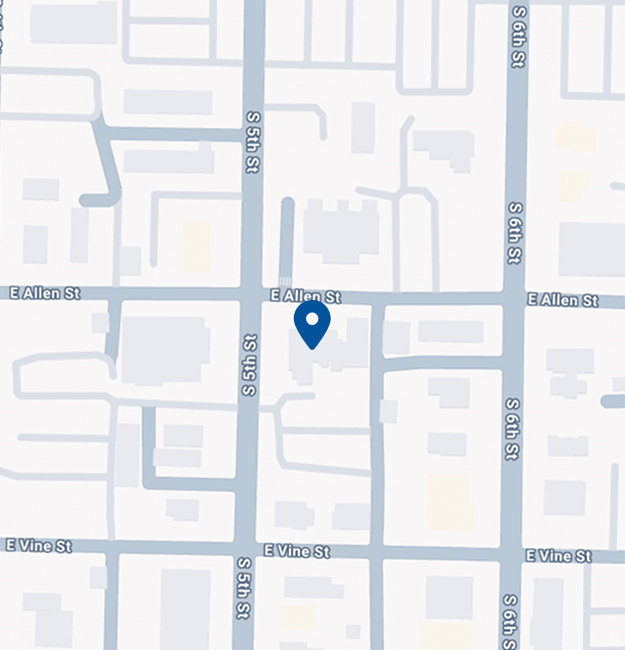
📍 1100 S 5th St, Springfield, IL 62703 | ☎ (217) 544-4057 | 🌐 hankenlaw.com
This article is for general educational purposes only and does not constitute legal advice. Every case is unique — contact an experienced Springfield criminal defense attorney for guidance on your specific situation.
Address
Our offices are located at the corner of South Fifth Street and Vine, in the historic Mary Bryant Home for the Blind.