

I Am a Former Prosecutor Who Will Fight for Your Rights













Cannabis Conviction Expungement in Illinois
What Qualifies
Cannabis is legal in Illinois now, but that doesn’t mean old cannabis records disappeared on their own. Thousands of Illinois residents — including people right here in Springfield and Sangamon County — still have an arrest or conviction on their record for conduct that’s no longer a crime. Whether that record clears automatically or requires filing depends on whether it’s a law enforcement record or a court record, and how much cannabis was involved. A 2026 change to Illinois cannabis law adds a new wrinkle on top of that.
📞 Call (217) 544-4057 for a Free, Confidential Consultation
A Former Prosecutor on Your Side
As a former Sangamon County Assistant State’s Attorney, Scott Hanken has seen cannabis cases from both sides of the courtroom — including many filed under laws that no longer exist. That background helps in exactly the situation this page addresses: figuring out precisely which record-clearing path applies to your specific case, and making sure nothing falls through the cracks between the automatic process and the one that requires filing.
Law Enforcement Records vs. Court Records: What’s Automatic and What Requires Filing
The single most important distinction in Illinois cannabis expungement is between a law enforcement record — the arrest itself, held by the Illinois State Police and the arresting agency — and a court record, an actual conviction entered by the circuit court. Automatic expungement under 410 ILCS 705 reaches the first category on its own. It does not reach the second — a conviction record requires its own Motion to Vacate and Expunge under 20 ILCS 2630/5.2(i), filed in circuit court.
| Record Type | Path to Clearing |
|---|---|
| Law enforcement arrest record, 30 grams or less, no conviction | Automatic expungement by the Illinois State Police on a staggered schedule — no filing required |
| Court conviction record, misdemeanor or Class 4 felony, possession | Motion to Vacate and Expunge filed in circuit court by the individual or the State’s Attorney |
| Court conviction record, 30 grams or less | Also identified by the Illinois State Police and forwarded to the Prisoner Review Board for Governor’s pardon and expungement consideration |
| Court conviction record, 30–500 grams | May be expunged through an individual Motion to Vacate and Expunge, without automatic PRB referral |
| Records newly affected by the 2026 possession-limit increase (up to 60 grams) | Reported to expand automatic expungement eligibility; confirm the current threshold with the Illinois State Police or an attorney |
| Manufacture, delivery, or larger-quantity offenses | Generally not covered by this cannabis-specific pathway; standard expungement and sealing rules and exclusions apply |
The 2026 Possession-Limit Change and What It May Mean for Your Case
In June 2026, Governor Pritzker signed Public Act 104-0463, doubling Illinois’s legal personal possession limit for cannabis flower from 30 grams to 60 grams. Reporting on the new law describes it as expanding the pool of past convictions eligible for automatic expungement to match the new threshold — similar to how the original 30-gram cutoff was set when cannabis was first legalized. As of this writing, state agencies had not yet published updated official guidance reflecting the new threshold in their public-facing materials. If your cannabis record involves more than 30 grams but less than 60 grams, it’s worth confirming directly with the Illinois State Police or a licensed attorney whether your specific record now qualifies — rather than assuming the older 30-gram cutoff still applies.
Key Facts About Cannabis Expungement in Illinois
- Illinois’s cannabis legalization law created a separate expungement process for eligible cannabis-related records, distinct from the standard expungement and sealing rules.
- Non-conviction law enforcement arrest records involving 30 grams or less of cannabis are automatically expunged by the Illinois State Police on a staggered schedule based on when the record was created.
- A cannabis conviction is a court record and is not covered by the automatic arrest-record expungement process; it generally requires its own Motion to Vacate and Expunge.
- Either the individual or the State’s Attorney may file that motion in the circuit court where the case was heard.
- Conviction records involving 30 grams or less of cannabis were separately identified by the Illinois State Police and forwarded to the Prisoner Review Board for Governor’s pardon and expungement consideration.
- If the Governor grants a pardon authorizing expungement, the Prisoner Review Board files the expungement petition on the individual’s behalf — no separate motion is required in that scenario.
- Public Act 104-0463, signed in June 2026, doubled Illinois’s personal cannabis possession limit to 60 grams and is reported to expand automatic expungement eligibility to match, though official state agency guidance had not yet been updated to reflect this as of this writing.
- Cannabis expungement under this pathway does not require the waiting periods that apply to standard expungement.
- The Office of the State Appellate Defender provides free, court-accepted forms and instructions for filing a Motion to Vacate and Expunge a cannabis conviction.
- New Leaf Illinois, a network of nonprofit legal aid organizations, provides free assistance to individuals throughout Illinois, including Sangamon County, seeking to expunge eligible cannabis convictions.
- Manufacture, delivery, and higher-quantity cannabis offenses generally remain subject to standard expungement and sealing rules, not this cannabis-specific pathway.
- A cannabis expungement addresses only the cannabis-related charge — other charges from the same arrest, such as a DUI, are evaluated separately, and DUI convictions are never eligible for expungement or sealing.
- Illinois’s Clean Slate Act does not replace this cannabis-specific pathway, which continues to operate independently.
- You can file a cannabis expungement motion on your own initiative if you don’t want to wait for the staggered automatic schedule to reach your record.
Not sure if your cannabis record was automatically expunged, or whether the 2026 law change affects you? Call (217) 544-4057.
Frequently Asked Questions (FAQs)
Are cannabis convictions automatically expunged in Illinois?
Not automatically. Non-conviction law enforcement arrest records involving 30 grams or less of cannabis are automatically expunged by the Illinois State Police on a staggered schedule. A court conviction record generally requires a Motion to Vacate and Expunge filed in circuit court, though many were also forwarded to the Prisoner Review Board for pardon consideration.
What cannabis convictions qualify for expungement?
Misdemeanor and Class 4 felony possession convictions generally qualify for a Motion to Vacate and Expunge. Manufacture, delivery, and larger-quantity offenses are generally not covered by this specific pathway.
Does the 2026 law raising the possession limit to 60 grams affect old convictions?
It’s reported to. Public Act 104-0463, signed in June 2026, doubled Illinois’s personal possession limit to 60 grams and is reported to expand automatic expungement eligibility to match. Official state agency guidance had not yet caught up to this change as of this writing, so it’s worth confirming your specific record with the Illinois State Police or an attorney rather than assuming the older 30-gram cutoff still applies.
Do I need a lawyer to file a cannabis expungement motion?
It isn’t legally required, and free resources exist through the Office of the State Appellate Defender and New Leaf Illinois, but an attorney can help confirm eligibility and avoid errors that delay the motion.
What’s the difference between cannabis expungement and standard expungement?
Cannabis expungement operates on its own track for eligible cannabis convictions and does not require the waiting periods that apply to standard expungement under Illinois’s general expungement and sealing law.
Schedule Your Free Consultation
Whether you’re trying to confirm an old cannabis arrest was actually expunged, or you have a possession conviction that needs its own Motion to Vacate and Expunge, getting the right answer starts with a conversation — including how the 2026 possession-limit change may affect your specific record.
Call W. Scott Hanken at (217) 544-4057 or contact the office online to schedule a free, confidential consultation. The firm serves clients throughout Springfield, Sangamon County, and Central Illinois.
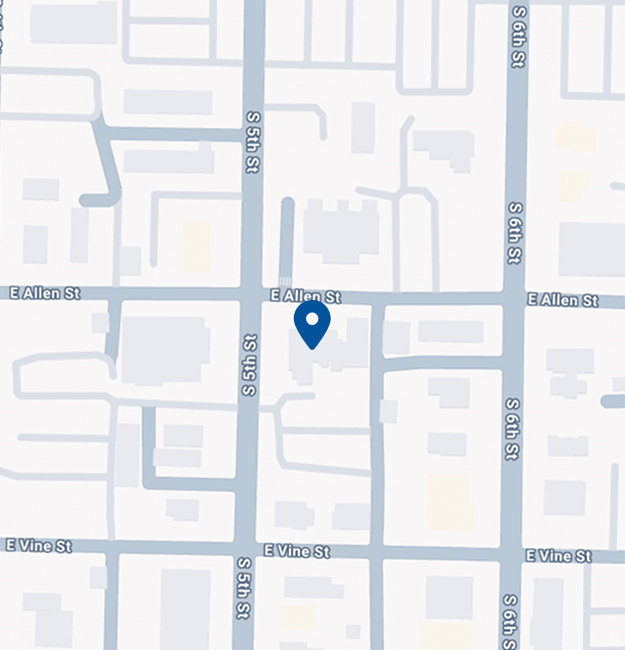
📍 1100 S 5th St, Springfield, IL 62703 ☎ (217) 544-4057 🌐 hankenlaw.com
This page is for general informational purposes only and does not constitute legal advice. Every case is unique — contact W. Scott Hanken directly for guidance on your specific situation.
Address
Our offices are located at the corner of South Fifth Street and Vine, in the historic Mary Bryant Home for the Blind.