- Free Consultation: (217) 544-4057 Tap Here To Call Us














Can Police Force You to Unlock Your Phone in Sangamon County? Face ID, Passcodes & Your Rights


Last Reviewed & Updated: October 21, 2026
By: W. Scott Hanken | Former Sangamon County Prosecutor | Springfield Criminal Defense Attorney | Voted “Best Attorney” — Illinois Times Best of Springfield & State Journal-Register Reader’s Choice | Springfield, IL | Sangamon County | (217) 544-4057 | hankenlaw.com
Bottom Line: In Sangamon County, a judge can order you to unlock your phone if two things are true:
- Police have a search warrant for the phone.
- Prosecutors can show the phone is yours and that you know how to open it.
That rule comes from the Illinois Supreme Court’s 2023 decision in People v. Sneed. The court also said it would not treat Face ID or a fingerprint any differently from a passcode. Police cannot skip the warrant. And you should never hand over access before you talk to a lawyer.
Who Decides This Question in Sangamon County?
Sangamon County has no local rule on compelled phone unlocking. Criminal cases here are heard in the circuit court of the Seventh Judicial Circuit. Appeals go to the Fourth District Appellate Court in Springfield. Both courts must follow the Illinois Supreme Court.
So when a Sangamon County prosecutor files a motion to compel a defendant to unlock a phone, the judge applies Sneed. The Fourth District also decided the appellate round of Sneed in 2021, before the Supreme Court took the case.
First Question: Do Police Have a Warrant?
Before anyone can make you unlock a phone, police need legal authority to search it. In Riley v. California, the U.S. Supreme Court held that officers generally must get a warrant before searching the data on a phone taken during an arrest. Being arrested does not give an officer the right to scroll through your messages.
Officers can hold onto the phone while they apply for a warrant. The most common way around the warrant requirement is your own consent.
That is the Fourth Amendment question: can police search the phone? Whether you can be forced to help them is a separate Fifth Amendment question. Most of the fight happens there.
What the Illinois Supreme Court Decided in People v. Sneed
Keiron Sneed was charged with forgery in De Witt County. Police got a warrant for his phone but could not open it, and he refused to give the passcode. Prosecutors asked the court to order him to unlock it. The Illinois Supreme Court ruled for the State. It held that:
- Entering a passcode is testimonial, but only in a narrow way. The act communicates three things: a passcode exists, you control it, and it works.
- The “foregone conclusion” exception can remove Fifth Amendment protection. If the State already knows those three facts with “reasonable particularity,” the act adds little to what the State has. The Fifth Amendment then does not block the order.
- The test looks at the passcode, not what is on the phone. Prosecutors do not have to prove what evidence the phone holds. The warrant already covers that question. This overruled a 2019 Third District case, People v. Spicer, which had looked at the phone’s contents.
- A passcode proves itself. If it opens the phone, it is authentic.
- The Illinois Constitution gives no extra protection here. The court interpreted Illinois’s self-incrimination clause the same way as the Fifth Amendment.
The State’s proof in Sneed was simple. The phone was found on him when he was arrested, and he listed its number as his own on his bond paperwork. That was enough.
Justice Neville dissented. He argued that the Illinois Constitution should protect people from being forced to unlock their phones. The U.S. Supreme Court declined to review the case in February 2024, so Sneed is the law in every Illinois courtroom, including Sangamon County’s.
What Sneed Left Open
In Sneed, the order let the defendant type in the passcode himself without telling it to anyone. The court said in a footnote that it was not deciding whether forcing someone to say the passcode out loud to officers would be treated differently. That question is still open in Illinois.
What About Face ID and Touch ID?
Sneed was a passcode case, but the opinion addressed biometrics directly. The court said fingerprints, facial recognition, and passcodes are all like a key. It declined to give people who use a passcode more Fifth Amendment protection than people who use their face or finger.
Because the case did not involve biometrics, that statement may not strictly bind a future Face ID case. Still, it is a clear signal. A Sangamon County judge would very likely apply the same foregone conclusion analysis to Face ID or Touch ID.
Federal appeals courts have split on biometrics:
- United States v. Payne (Ninth Circuit, 2024). Officers physically pressed a parolee’s thumb to his phone. The court held this was not testimonial, because it required no thought on his part. The court added that the result might be different if the suspect had to choose the finger himself.
- United States v. Brown (D.C. Circuit, 2025). An FBI agent ordered a suspect to open his phone, and he pressed his thumb to it. The court held that act was testimonial. It reasoned that the act told police “I know how to open this phone, I control it, and this finger is the key.” The defendant was pardoned days later, which ended the case before the Supreme Court could take it up.
| Unlock method | Illinois state court (Sneed) | Federal appeals courts |
|---|---|---|
| Passcode, typed in privately | Can be compelled if the foregone conclusion test is met | Generally treated as testimonial; courts differ on the exception |
| Passcode, said out loud | Undecided | Generally treated as testimonial |
| Face ID / fingerprint | Treated the same as a passcode | Split: the Ninth Circuit allows forced use, the D.C. Circuit has found it testimonial |
Neither federal decision binds a Sangamon County judge in a state case. If you are facing federal charges in Springfield, the rules may differ, so talk with a lawyer about the federal law that applies.
Refusing a Police Request vs. Refusing a Judge’s Order
These are two different situations:
- An officer asks you to unlock your phone. You can say no. Declining a police request is your right.
- A judge orders you to unlock it after a motion to compel. This is different. Illinois judges enforce their orders through contempt of court. Civil contempt is used to force someone to comply with an order. Criminal contempt is used to punish willful defiance of one.
Two things make any situation worse:
- Physically resisting. Don’t pull the phone away or fight an officer. That can lead to a separate charge. See resisting or obstructing a peace officer in Illinois.
- Deleting or wiping data. Remotely erasing a phone after police have it, or deleting messages once you know an investigation is underway, can be charged as evidence tampering.
What to Do If Police Want Into Your Phone
- Don’t consent. Say clearly: “I do not consent to a search of my phone.” Consent removes the warrant requirement. An unlock you give freely is not “compelled,” so the Fifth Amendment does not apply to it.
- Don’t give your passcode. Ask for a lawyer. Asking for an attorney cannot be held against you. See Can an Illinois prosecutor argue that asking for a lawyer shows guilt?
- Stay calm and don’t physically resist. If officers take the phone, let them. The fight over access happens in court.
- Don’t delete or change anything once police are involved. If police have taken the phone or a court has ordered you to unlock it, do not touch it, wipe it, or change its settings. Doing so can create a new charge that is worse than the original one.
- Know how your phone works, before there’s ever a problem. According to Apple, an iPhone requires the passcode instead of Face ID in three situations:
- after a restart,
- after 48 hours without an unlock,
- after you hold the side button and either volume button for 2 seconds.
How a Defense Attorney Fights a Motion to Compel
Sneed lets prosecutors make the request, but it does not hand them the result. In a Sangamon County case, a defense attorney looks at four things.
- The warrant. Was there real probable cause? Is the warrant specific enough about what can be searched? The Sneed court said concerns about how much a phone holds belong in exactly this kind of Fourth Amendment challenge.
- The State’s proof that you control the phone. In Sneed, the phone was on the defendant and his bond sheet listed its number. Family phones, phones found in a shared car, and phones never tied to you are harder cases for the State.
- How the unlock actually happened. Did officers ask, order, or physically force it? Were Miranda warnings given first? Brown turned on exactly these facts.
- Issues to preserve for appeal. The state constitutional argument from Justice Neville’s dissent, and the developing biometric split, may matter on appeal.
As a former Sangamon County prosecutor, I’ve seen how these motions get built from the State’s side. The weak points are usually in the details.
Frequently Asked Questions (FAQs)
No. They can ask, and you can say no. Without a warrant or your consent, officers generally cannot search the phone’s contents. They may hold onto the phone while they apply for a warrant.
Not under Sneed. The Illinois Supreme Court said it would not treat biometric unlocking differently from a passcode. That statement came in a passcode case, so it may not strictly bind a future Face ID case. Federal courts are split, but federal decisions do not control state cases in Sangamon County.
No. Under Sneed, the question is whether the State can show the passcode exists and that you possess or control it. What is stored on the phone is covered by the warrant, not by the unlock order.
That is an open question in Illinois. Sneed approved an order that let the defendant enter the code privately. The court expressly left open whether saying the code aloud would be treated differently.
The State must prove with “reasonable particularity” that you possess or control the passcode. Shared devices, phones not found on you, and phones with no clear link to you make that proof harder.
Not yet. The Court declined to hear Sneed in February 2024 and declined to hear Payne in November 2024. Brown ended without Supreme Court review. Until the Court acts, Sneed controls in Sangamon County.
Further Reading
Related Articles
- Pleading the Fifth in Illinois: What You Need to Know — If you want to understand the right that sits behind every unlock fight, start here.
- Do Police Need a Warrant to Search Flock Data in Illinois? — Your phone isn’t the only digital trail Springfield police can follow. This covers the license-plate cameras.
- Evidence Tampering in Illinois: Deleted Texts, Hidden Guns — Read this before you think about wiping a phone.
- Can an Illinois Prosecutor Argue That Asking for a Lawyer Shows Guilt? — Why asking for a lawyer is the safest move when police want your passcode.
- Charged With Resisting or Obstructing a Peace Officer in Illinois? Here’s What the Law Actually Says — and What Just Changed — Where the line falls between refusing and resisting.
Browse by Topic
Ready to Fight Your Criminal Charge in Springfield?
Call W. Scott Hanken at (217) 544-4057 or contact us online for a free consultation. We serve clients throughout Springfield, Sangamon County, and Central Illinois.
About the Author: W. Scott Hanken, Attorney at Law
Scott Hanken is a Springfield, Illinois criminal defense attorney with over 37 years of experience, including service as a former Sangamon County prosecutor. He has been voted Best Attorney by the Illinois Times and State Journal-Register, holds an Avvo 10.0 “Superb” rating, and has earned over 270 five-star Google reviews. He serves clients throughout Sangamon County and Central Illinois.
📍 1100 S 5th St, Springfield, IL 62703 | ☎ (217) 544-4057 | 🌐 hankenlaw.com
This article is for general educational purposes only and does not constitute legal advice. Every case is unique — contact an experienced Springfield criminal defense attorney for guidance on your specific situation.
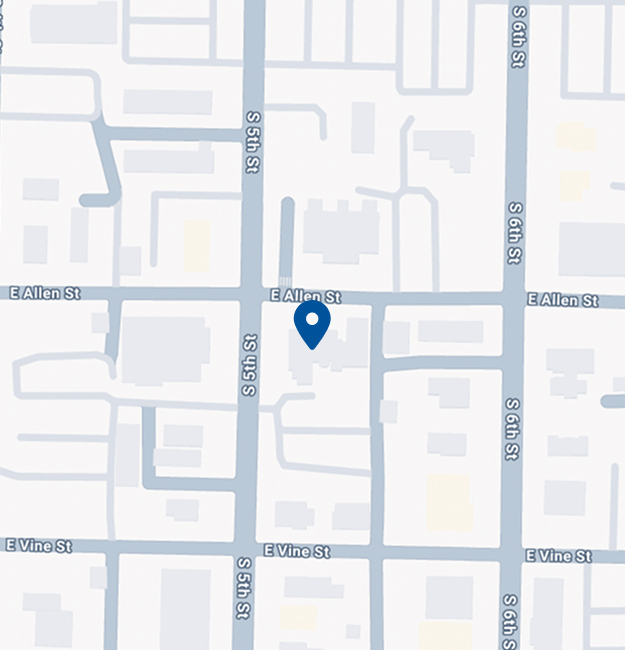
Address
Our offices are located at the corner of South Fifth Street and Vine, in the historic Mary Bryant Home for the Blind.