- Free Consultation: (217) 544-4057 Tap Here To Call Us




New Illinois Law on Gambling Disorder: What It Means for Criminal Charges


Last Reviewed & Updated: August 13, 2026
By: W. Scott Hanken | Former Sangamon County Prosecutor | Springfield Criminal Defense & Theft Crimes Defense Attorney | Voted “Best Attorney” — Illinois Times Best of Springfield & State Journal-Register Reader’s Choice | Springfield, IL | Sangamon County | (217) 544-4057 | hankenlaw.com
Illinois now treats a gambling disorder the same way the law has treated drug and alcohol addiction for decades. Public Act 104-0626, signed by Governor Pritzker on July 24, 2026, amends the Substance Use Disorder Act so that a defendant with a diagnosed gambling disorder can ask a Sangamon County judge for treatment as a condition of probation under 20 ILCS 301/40-10, the same provision that has long covered substance abuse treatment in place of straight punishment.
Bottom Line:
If you or someone you love was charged with theft, forgery, or embezzlement because a gambling habit got out of control, Illinois law as of July 24, 2026 gives your defense attorney a new argument at sentencing. It is not automatic, it does not apply to every charge, and it raises a genuine legal wrinkle covered below. But it changes the conversation in plea negotiations and at sentencing in ways that did not exist a month ago.
What Did Illinois Just Change About Gambling Addiction and the Law?
Senate Bill 2749 passed both chambers of the General Assembly this spring, unanimously in the Senate and with only 11 dissenting votes in the House, and Governor Pritzker signed it into law as Public Act 104-0626 on July 24, 2026. The law took effect immediately.
P.A. 104-0626 amends the Substance Use Disorder Act (20 ILCS 301) to add “gambling disorder” as a defined condition alongside substance use disorder throughout the Act. Section 1-10 now defines “gambling disorder” as a persistent and recurring pattern of maladaptive gambling behavior leading to significant psychological distress and impairment in health and mental functioning, and it expressly classifies the condition under substance use disorders in the DSM-5 because it activates the same reward pathways as drug abuse.
That single definitional change ripples through the whole statute: the Department of Human Services must now run a crisis hotline and public awareness campaign for gambling disorder, licensed treatment providers can add gambling disorder treatment as an adjunct to any existing level of care, and, most importantly for anyone facing charges, Section 40-10, the treatment-as-a-condition-of-probation provision, now applies to gambling disorder as well as substance use disorder.
Does This Mean I Can Use a Gambling Addiction as a Defense to My Charges?
No, and this is worth being direct about. A gambling disorder is not an affirmative defense. It does not negate intent, and it will not get a theft or forgery charge dismissed outright. What it does is give the court, under 20 ILCS 301/40-10, a statutory path to place an eligible defendant on probation with mandatory treatment instead of a straight sentence, and to subject that probation to the terms of Section 5-6-3 of the Unified Code of Corrections.
In my 37+ years handling criminal cases in Sangamon County, the difference between a legal defense and a sentencing alternative is one that clients confuse constantly, and it matters enormously to how we build a case strategy from the first court date.
What Crimes Does This Actually Affect in a Sangamon County Courtroom?
Compulsive gambling rarely generates its own criminal charge. What it generates is retail theft, forgery, employee embezzlement, and fraud, as people try to fund the habit or cover losses. Those are the charges where this new law will actually get argued.
Illinois grades theft, under 720 ILCS 5/16-1, strictly by dollar value, and the classification matters because it determines whether probation is even legally on the table before Section 40-10 relief can apply:
| Value of Property Stolen | Offense Classification | Probation Eligible? |
|---|---|---|
| Up to $500 | Class A misdemeanor | Yes |
| $500 to $10,000 | Class 3 felony | Yes |
| $10,000 to $100,000 | Class 2 felony | Yes |
| $100,000 to $500,000 | Class 1 felony | Yes |
| $500,000 to $1,000,000 | Class 1 felony, non-probationable | No |
| Over $1,000,000 | Class X felony | No |
Statute Callout — 20 ILCS 301/40-10(a):
“If a court has reason to believe that an individual who is charged with or convicted of a crime suffers from a substance use or gambling disorder and the court finds that he or she is eligible to make the election provided for under Section 40-5, the court shall advise the individual that he or she may be sentenced to probation and shall be subject to terms and conditions of probation under Section 5-6-3 of the Unified Code of Corrections.”
— 20 ILCS 301/40-10, as amended by P.A. 104-0626, eff. July 24, 2026
How Does Treatment as a Condition of Probation Actually Work?
Once a judge has reason to believe a defendant suffers from a gambling disorder, and the defendant is otherwise eligible, the court orders an assessment by a Department of Human Services-designated program, the same type of intervention-licensed provider that has long handled TASC assessments for drug cases. If the assessment finds treatment is medically necessary and likely to succeed, the defendant is placed on probation under the designated program’s supervision for a period up to the maximum sentence for the conviction or five years, whichever is shorter.
Complete the program and satisfy the other terms of probation, and under Section 40-10(e) the court can vacate the judgment of conviction outright if this is a first felony offense, essentially the same clean-slate outcome that has made TASC probation so valuable in drug cases for years.
What If My Gambling Disorder Exists Without Any Substance Use Disorder?
This is where the new law gets genuinely complicated, and it is the kind of statutory interaction that only shows up when you read the amendment against the sections it did not touch. P.A. 104-0626 amended Section 40-10 to add “or gambling disorder” throughout the treatment-as-condition-of-probation language. It did not amend Section 40-5, the companion section that defines who is eligible to “elect” treatment in the first place, and that section still opens with the phrase “an individual with a substance use disorder.”
Section 40-10 conditions its entire framework on the defendant being “eligible to make the election provided for under Section 40-5.” If Section 40-5’s eligibility trigger is read literally as covering only substance use disorder, a defendant whose gambling disorder exists on its own, with no co-occurring drug or alcohol diagnosis, sits in an unresolved gap between two sections of the same amended statute. I expect courts and the Department to resolve this through the same “substance use or gambling disorder” language the legislature used everywhere else in the amendment, but until that gets tested or the General Assembly cleans up Section 40-5 to match, this is exactly the kind of textual argument a defense attorney needs to be ready to make, and to anticipate the State making in the other direction.
What If the Amount I’m Accused of Taking Makes the Charge Non-Probationable?
Look back at the theft table above. If the State alleges a value between $500,000 and $1,000,000, the offense is a Class 1 felony that is non-probationable by statute, and above $1,000,000 it is a straight Class X felony. Section 40-10 relief is built entirely around a sentence of probation. If the charge itself removes probation as a legally available disposition, recognizing a gambling disorder does not change that math. This comes up more than people expect in embezzlement cases, where losses accumulate in small increments over months or years and cross the six-figure threshold long before anyone notices.
What If This Isn’t My First Time Asking for Treatment Instead of Punishment?
Section 40-5 also disqualifies anyone who “elected and was admitted to a designated program on 2 prior occasions within any consecutive 2-year period.” That exclusion was not touched by P.A. 104-0626, and there is no reason to think it will be read any differently for a gambling disorder election than it has been for a substance use disorder election. If you have already used this option twice in the past two years, this new law will not open a third door.
How Has the Substance Use Disorder Act Changed, Section by Section?
| Provision | Before July 24, 2026 | After July 24, 2026 |
|---|---|---|
| Sec. 1-10 definitions | Covered substance use disorder only | Adds “gambling disorder” and “gambling” as defined terms |
| Sec. 5-20 | No dedicated gambling disorder program | Requires a DHS hotline, website, and public awareness program for gambling disorder |
| Sec. 15-10 licensure | Treatment license covered substance use levels of care only | Gambling disorder treatment may be added as an adjunct to any existing treatment level of care |
| Sec. 40-10 probation | Referenced “substance use disorder” only | Adds “or gambling disorder” throughout |
| Sec. 40-5 election eligibility | Defines eligibility by “substance use disorder” | Not amended by P.A. 104-0626 |
This is a Sangamon County-specific consideration too. Local intervention-licensed providers who currently handle DUI evaluations and TASC assessments will need to build out gambling disorder screening capacity under the amended Section 15-10 before this option is practically available to defendants here, not just theoretically available on paper. That rollout timeline is worth asking about directly if treatment is part of your defense strategy.
Frequently Asked Questions (FAQs)
As of July 24, 2026, “gambling disorder” is a defined condition under the Substance Use Disorder Act, and the statute itself cites its classification as a DSM-5 disorder related to substance use. It is not classified as a disability under a separate Illinois statute, but its formal recognition under 20 ILCS 301 is what unlocks the treatment-in-lieu-of-probation option discussed above.
Not automatically. Under Section 40-10(e), if you successfully complete treatment as a first-time felony offender, the court can vacate the conviction and dismiss the proceedings on motion. That is different from a dismissal at the outset of the case, and it only happens after successful completion of the full probation term.
No. It does not negate the intent element of theft, forgery, or fraud charges. It creates a sentencing and probation pathway, not a defense to guilt.
A designated program is a treatment provider holding an intervention license from the Illinois Department of Human Services, the same type of licensed entity that conducts DUI evaluations and drug assessments. My office works with these providers regularly and can help arrange an evaluation as part of building your defense.
Because Section 40-10 relief attaches at sentencing rather than at the time of the offense, this office will argue it can apply to pending cases that have not yet reached sentencing, even if the underlying conduct occurred before the law took effect. This is a developing area, and how individual Sangamon County judges apply it will become clearer over the coming months.
Contact a criminal defense attorney before you talk to police, prosecutors, or even family members about the details. Whether treatment-based probation is realistically available in your case depends on the charge classification, your record, and the specific facts, and that assessment needs to happen early, not after a plea is already on the table.
Further Reading
Practice Area
Related Articles
- Illinois Retail Theft Charges: Why the $300 Line Matters — Shows how Illinois classifies theft charges by value, the same value-driven framework the probation-eligibility analysis above depends on.
- Alternative Sentencing Options for Drug Cases in Illinois — Covers the TASC probation framework this new law extends to gambling disorder, useful for readers comparing how the established version works.
- Sangamon County Expungement Process — For readers wondering what actually happens after a Section 40-10(e) vacatur, this walks through the local record-clearing process step by step.
Browse by Topic
Ready to Fight Your Theft Charge in Springfield?
Call W. Scott Hanken at (217) 544-4057 or contact us online for a free consultation. We serve clients throughout Springfield, Sangamon County, and Central Illinois.
About the Author: W. Scott Hanken, Attorney at Law
Scott Hanken is a Springfield, Illinois criminal defense attorney with over 37 years of experience, including service as a former Sangamon County prosecutor. He has been voted Best Attorney by the Illinois Times and State Journal-Register, holds an Avvo 10.0 “Superb” rating, and has earned over 270 five-star Google reviews. He serves clients throughout Sangamon County and Central Illinois.
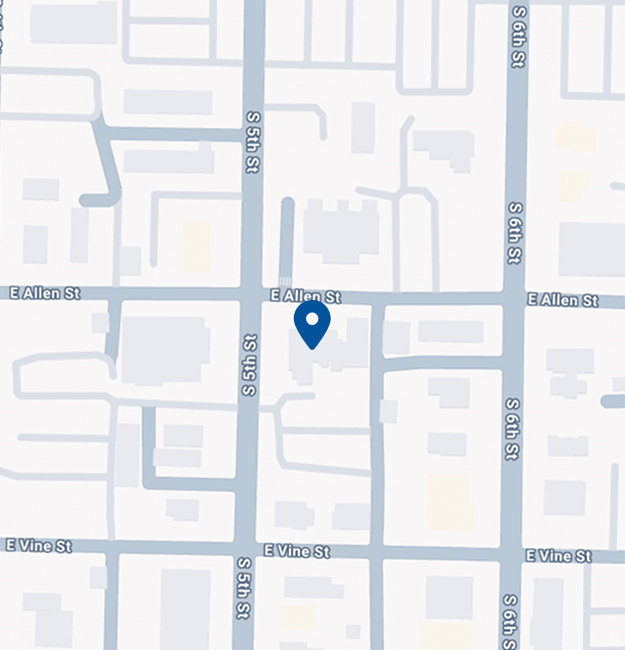
📍 1100 S 5th St, Springfield, IL 62703 | ☎ (217) 544-4057 | 🌐 hankenlaw.com
This article is for general educational purposes only and does not constitute legal advice. Every case is unique — contact an experienced Springfield criminal defense attorney for guidance on your specific situation.
Address
Our offices are located at the corner of South Fifth Street and Vine, in the historic Mary Bryant Home for the Blind.