- Free Consultation: (217) 544-4057 Tap Here To Call Us














Can Your AI Chats Be Used Against You in Illinois?



Last Reviewed & Updated: November 11, 2026
By: W. Scott Hanken | Former Sangamon County Prosecutor | Springfield Criminal Defense Attorney | Voted “Best Attorney” — Illinois Times Best of Springfield & State Journal-Register Reader’s Choice | Springfield, IL | Sangamon County | (217) 544-4057 | hankenlaw.com
In many cases, yes. In United States v. Heppner, a federal judge ruled that a criminal defendant’s conversations with a public AI chatbot were not protected by attorney-client privilege or work product. Illinois courts are not bound by that ruling, but Illinois privilege law points the same direction.
Bottom Line: If you are under investigation or already charged, assume a prosecutor may one day read out loud in a Sangamon County courtroom anything you type into ChatGPT, Claude, Gemini or any other AI tool. Your words are your own statements. The chatbot is not your lawyer, and pasting your lawyer’s advice into it can cost you the privilege on that advice too. Talk to your attorney first, and let your attorney decide whether any AI tool belongs in your defense.
Facing charges and worried about what is on your phone? Call W. Scott Hanken, Attorney at Law at (217) 544-4057 before you type another word about your case.
Already Used AI About Your Case? Do These Three Things Now: Stop discussing your facts, charges or your lawyer’s advice with any AI tool. Do not delete chats, accounts or devices. Tell your lawyer which tool you used, roughly when, and what you typed.
In This Post:
- What did the court decide in United States v. Heppner?
- Why weren’t Heppner’s AI chats protected by attorney-client privilege?
- Can sharing your lawyer’s advice with AI waive privilege on the advice itself?
- Does Illinois have to follow the Heppner decision?
- Is your AI chat “work product” in an Illinois criminal case?
- How would prosecutors in Sangamon County get your AI chats?
- Can your AI prompts be used as an admission at trial?
- Do other courts agree with Heppner?
- What questions should you ask before using AI on a criminal case?
- Can the defense use Heppner too?
- What should you do if you have already used AI about your case?
- Frequently Asked Questions (FAQs)
Update note: This post will be updated (check the above updated date for the most recent update to this post) if Heppner’s sentencing or any appeal, or a new Illinois decision on AI and privilege, changes the analysis.
What Did the Court Decide in United States v. Heppner?
The court decided that federal prosecutors could have 31 documents a defendant created with a consumer AI chatbot. Neither attorney-client privilege nor the work product doctrine protected them.
Bradley Heppner, the former chairman of GWG Holdings and Beneficient, was charged in the Southern District of New York with securities fraud, wire fraud, conspiracy, false statements to auditors and falsifying records. After he got a grand jury subpoena and hired defense counsel, he used the consumer version of Anthropic’s Claude on his own to build reports on defense strategy and legal arguments. He later sent those reports to his lawyers. FBI agents seized the devices holding them when they searched his home after his arrest on November 4, 2025.
His lawyers claimed privilege. The government asked the court to rule that the documents were not protected. Judge Jed S. Rakoff ruled from the bench on February 10, 2026, and issued a written opinion on February 17, 2026. The court called the issue a question of first impression nationwide.
Case Callout — United States v. Heppner: United States v. Heppner, No. 25-cr-00503 (JSR), 2026 WL 436479 (S.D.N.Y. Feb. 17, 2026). Holding: when a defendant who has a lawyer creates documents on a public AI platform on his own initiative and later shares them with counsel, neither the attorney-client privilege nor the work product doctrine protects them.
Heppner went to trial in April 2026. On May 7, 2026, a federal jury convicted him of securities fraud, wire fraud, conspiracy, and false statements to auditors. His sentencing was originally set for October 7, 2026, and has since been postponed.
Why Weren’t Heppner’s AI Chats Protected by Attorney-Client Privilege?
A chatbot is not a lawyer, the conversations were not confidential, and he was not seeking legal advice from an attorney. Privilege needs all three. Heppner’s chats failed at least two.
The court applied the ordinary test. The communication has to be between client and attorney, kept confidential, and made to get legal advice. On the first element, the opinion was blunt: “Because Claude is not an attorney, that alone disposes of Heppner’s claim of privilege.” A chatbot holds no license, owes no duty of loyalty and answers to no disciplinary board. Legally, talking through your case with one is no different from talking it through with a friend at a bar.
On confidentiality, the court looked at the platform’s consumer privacy policy. It let the company keep what users typed and what the AI wrote back, use that material for training, and disclose it to third parties, including government authorities. With terms like that, Heppner had no reasonable expectation that the conversation would stay private.
On purpose, the court said the question is whether Heppner was trying to get legal advice from the AI itself, not whether he planned to forward the results to his lawyers later. Sending unprivileged material to counsel after the fact does not make it privileged.
Can Sharing Your Lawyer’s Advice With AI Waive Privilege on the Advice Itself?
It can. In a footnote, Judge Rakoff concluded that by feeding information from his attorneys into the chatbot, Heppner also waived privilege over those original attorney-client communications.
This is the part of the ruling that should worry every client. The risk does not stop at the AI transcript. Say you copy your lawyer’s email into a chatbot and ask it to “explain this in plain English.” You may have handed the State an argument that the email itself is no longer privileged.
Illinois law offers a partial answer here, and you will not find it in out-of-state summaries of Heppner. In Center Partners, Ltd. v. Growth Head GP, LLC, 2012 IL 113107, the Illinois Supreme Court held that subject matter waiver does not apply to disclosures made outside of litigation, as long as they are not later used to gain a tactical advantage in the case. Applied to an AI chat, that suggests a Sangamon County judge should limit any waiver to the specific communication you pasted in. It should not open up every conversation you have had with your lawyer on the same subject. The item you disclosed is still exposed, but there is a strong argument for keeping the rest of the file sealed. No Illinois court has applied Center Partners to an AI disclosure yet, so treat this as a defense argument, not a guarantee.
Does Illinois Have to Follow the Heppner Decision?
No. Heppner is a federal trial court decision from New York, and it binds no Illinois court. But Illinois privilege law rests on the same foundation, and in some ways it is stricter.
The Illinois Supreme Court defines the privilege with the classic eight-part formula. In short: the client seeks legal advice from a professional legal adviser acting in that role, the client makes the communications in confidence, and they stay protected unless the privilege is waived. People v. Radojcic, 2013 IL 114197. Every piece of that test assumes a human lawyer and a confidential channel, and a public chatbot supplies neither. The same court has repeatedly called the privilege an exception to Illinois’s strong policy in favor of disclosure, so judges read it narrowly. Waste Management, Inc. v. International Surplus Lines Insurance Co., 144 Ill. 2d 178 (1991).
Is Your AI Chat “Work Product” in an Illinois Criminal Case?
Almost certainly not, if you created it yourself. Illinois’s criminal work product rule protects the thinking of the State and of defense counsel and counsel’s staff. It says nothing about a defendant’s own independent research.
Rule Callout — Illinois Supreme Court Rule 412(j)(i): “Disclosure under this rule and Rule 413 shall not be required of legal research or of records, correspondence, reports or memoranda to the extent that they contain the opinions, theories or conclusions of the State or members of its legal or investigative staffs, or of defense counsel or his staff.” (Ill. S. Ct. R. 412(j)(i), as amended Mar. 1, 2001.)
This matters because Heppner’s lawyers relied on a federal decision, Shih v. Petal Card, Inc., 565 F. Supp. 3d 557 (S.D.N.Y. 2021). Shih extended work product protection to materials a client prepared without a lawyer directing the work. Judge Rakoff rejected Shih. Under Illinois Rule 412(j)(i), that argument starts out even weaker, because the rule names counsel and counsel’s staff, not the client. Illinois courts have protected defense investigators’ reports precisely because the investigator works for the lawyer, and the Illinois Supreme Court has extended the attorney-client privilege to a client’s statements to a defense investigator acting for counsel. People v. Knippenberg, 66 Ill. 2d 276 (1977). A chatbot you opened on your own does not work for your lawyer.
Here is the practical line. Your attorney’s research and strategy memos are protected. Notes a defense investigator prepares for your attorney are generally protected. The chat you ran by yourself on your phone at 2 a.m. is not.
How Would Prosecutors in Sangamon County Get Your AI Chats?
Mostly through your phone, not through discovery. Illinois’s discovery rules sharply limit what the defense has to hand over, so the real exposure comes from search warrants and from legal demands served on technology companies.
Under Illinois Supreme Court Rule 413, a defendant’s disclosure obligations are narrow and subject to constitutional limits. So a Sangamon County prosecutor is unlikely to get your chat history by asking defense counsel for it. The path is the one used in Heppner: a search warrant for your devices. Under Riley v. California, 573 U.S. 373 (2014), police generally need a warrant to search the contents of a cell phone. Once they have one, a forensic extraction pulls app data, including saved AI conversations. Prosecutors can also seek records directly from the AI company, which is why the platform’s retention and disclosure terms matter so much.
Investigators already use this same route for social media. I covered how they get Snapchat, Meta and Telegram records in my post on social media evidence in Illinois criminal cases, and the warrant questions around license plate reader data in my post on Flock camera warrant rules in Illinois. AI chat logs are the next kind of digital evidence in that line.
Can police get my AI chats with a warrant in Springfield?
Yes. A warrant for your phone or computer reaches the AI conversations stored on it, and a warrant or other legal process served on the AI company can reach what the company keeps on its servers. When the company is covered by the federal Stored Communications Act, the government generally needs a warrant to get the contents of stored communications. Riley v. California requires a warrant to search a phone’s contents, but it does not carve out AI apps. In a Springfield or Sangamon County case, your defense starts with whether the warrant was supported by probable cause and whether the search stayed within its scope. Chats seized outside the warrant’s limits can be the target of a motion to suppress.
Can Your AI Prompts Be Used as an Admission at Trial?
Yes. What you type is your own statement, and Illinois law lets the State use a defendant’s own statements against him without running into the hearsay rule.
Illinois Rule of Evidence 801(d)(2)(A) says a party’s own statement is not hearsay when it is offered against that party. Say you typed, “I had six beers before I drove home, how do I beat the breath test.” Once the State shows you wrote it, that sentence can come in exactly the way a text message to a friend would. The question you asked can do as much damage as any answer you got, because it shows what you knew and when you knew it.
The chatbot’s replies raise a different issue. Illinois Rules of Evidence 801(a) and (b) treat a “statement” as a person’s assertion and define a “declarant” as “a person who makes a statement,” and an AI system is not a person. That gives defense counsel room to argue that machine-generated text cannot be admitted to prove the truth of what it says. The danger is adoption. Under Rule 801(d)(2)(B), a statement can be used against you if you showed that you adopted it or believed it was true. If the AI summarizes your facts and you reply “yes, that’s exactly what happened,” the State will argue you adopted the summary as your own account.
Here is how a prosecutor reads a chat history:
- Prompts describing what happened can be offered as admissions of the facts.
- Questions about penalties, evidence or how police investigate can be offered to show consciousness of guilt.
- Anything that doesn’t match what you later tell police or say on the stand can be used to attack your credibility.
- Timestamps can pin you, and your state of mind, to a specific moment.
Can the State use my AI chats in a Sangamon County DUI case?
Yes, if prosecutors lawfully obtain them and can show you wrote them. A prompt like “how long does alcohol stay in your blood after four drinks,” typed the night of a DUI arrest, can be offered as your own statement about how much you drank. In a Sangamon County DUI, that can undercut a defense built on a low drink count or on challenging the breath or blood test. The State still has to prove you were impaired or over the legal limit, and a chat is only one piece of evidence that defense counsel can challenge on authentication, context and how it was obtained.
Call (217) 544-4057 to speak with W. Scott Hanken, Attorney at Law, about what your devices may contain before you make any decisions about them.
Do Other Courts Agree With Heppner?
Not entirely. Two federal courts in civil cases reached the opposite result on work product for people representing themselves, so the law is still taking shape.
On the same day as the Heppner bench ruling, a magistrate judge in the Eastern District of Michigan decided Warner v. Gilbarco, Inc., 820 F. Supp. 3d 629 (E.D. Mich. Feb. 10, 2026). The judge held that a self-represented plaintiff’s drafting with ChatGPT’s help was protected work product, reasoning that work product is waived only by disclosure to an adversary or in a way likely to put it in an adversary’s hands. In Morgan v. V2X, Inc., 2026 WL 864223 (D. Colo. Mar. 30, 2026), a Colorado magistrate judge agreed. That judge distinguished Heppner on two grounds: Heppner was a criminal case, while the civil rules protect a party’s own work product, and a self-represented litigant is both the party and the advocate. The court still ordered the plaintiff to disclose the name of any AI platform he used to process information designated confidential under the case’s protective order.
| Case | Court and date | Who used AI | Result |
|---|---|---|---|
| United States v. Heppner | S.D.N.Y., Feb. 17, 2026 | Criminal defendant with a lawyer, acting on his own | Not privileged, not work product |
| Warner v. Gilbarco, Inc. | E.D. Mich., Feb. 10, 2026 | Self-represented civil plaintiff | Protected work product, no waiver |
| Morgan v. V2X, Inc. | D. Colo., Mar. 30, 2026 | Self-represented civil plaintiff | Work product applies; must name AI tools used with confidential discovery |
For an Illinois criminal defendant who has a lawyer, Heppner is the closest fit. Warner and Morgan protect people acting as their own lawyers. You have a lawyer, and the law expects your legal strategy to run through that lawyer.
What Questions Should You Ask Before Using AI on a Criminal Case?
The answer usually turns on three facts: who directed the AI use, which version you used, and what you did with the chats afterward.
What if my lawyer told me to use AI?
That may change the analysis, but no court has squarely decided it. Privilege can extend to non-lawyers who help an attorney give legal advice, a principle known as the Kovel doctrine. United States v. Kovel, 296 F.2d 918 (2d Cir. 1961). Judge Rakoff noted that if counsel had directed Heppner to use the tool, it “might arguably” have worked like a lawyer’s agent. In Sangamon County, that means any AI use connected to your defense should start with a conversation with your attorney. Do it on your attorney’s terms, with a tool your attorney has checked. Freelancing is what sank Heppner.
What if I used a paid or enterprise version instead of the free app?
It may help on confidentiality, but it does not fix the core problem. Heppner turned heavily on consumer privacy terms that allowed training and disclosure. Business and enterprise tools often promise no training and shorter data retention, which strengthens a confidentiality argument. But the chatbot is still not your attorney, and if you used it on your own, the purpose element still fails. Read the terms of whatever tool you used, and bring them to your lawyer.
Does deleting ChatGPT or Claude history protect me in Illinois?
No, and it can hurt you. Tell your lawyer immediately, and do not delete anything else.
Deleting your history in the app does not necessarily delete it from the company’s servers, and a forensic extraction may recover data from the device. Worse, destroying evidence after you know you are under investigation can lead to a new charge. Under 720 ILCS 5/31-4(a)(1), a person obstructs justice by knowingly destroying, altering, concealing or disguising physical evidence with the intent to prevent an arrest or obstruct a prosecution. The State must also prove the conduct materially impeded the investigation. People v. Comage, 241 Ill. 2d 139 (2011); People v. Casler, 2020 IL 125117. Whether deleted app data, as opposed to the phone itself, counts as “physical evidence” is not settled, but prosecutors can treat a wiped phone as altered evidence. Obstructing justice is a Class 4 felony, with a sentencing range of 1 to 3 years in prison, though probation is also possible.
Statute Callout — 720 ILCS 5/31-4 (Obstructing Justice): “A person obstructs justice when, with intent to prevent the apprehension or obstruct the prosecution or defense of any person, he or she knowingly commits any of the following acts: (1) Destroys, alters, conceals or disguises physical evidence, plants false evidence, furnishes false information…” Obstructing justice is a Class 4 felony, except as provided in subsection (b)(2). (Source: P.A. 97-1079, eff. 1-1-13.) Read 720 ILCS 5/31-4 at ILGA.gov
Can the Defense Use Heppner Too?
Yes. The ruling cuts both ways. If a defendant’s AI chats are not privileged, neither are the chats of a complaining witness, a co-defendant or a cooperating witness.
A witness may have rehearsed an account with a chatbot, asked it how to make a claim sound stronger, or described events differently than in a police statement. Any of that can become evidence for attacking the witness’s credibility. In a Sangamon County case built on one witness’s word, those records can matter. Defense counsel can ask the court for a subpoena directed to the witness, and Heppner gives the court a ready answer to any privilege objection. Getting the chats directly from the AI company is harder, because federal law generally bars covered providers from turning over the contents of users’ communications in response to a private subpoena.
What Should You Do If You Have Already Used AI About Your Case?
Stop, do not delete anything, and tell your lawyer exactly what you typed. Your attorney cannot protect you from evidence he does not know exists.
Practical steps:
- Stop using any AI tool to discuss your facts, your charges or your lawyer’s advice.
- Do not delete chats, accounts or devices. Keeping them protects you from an obstruction charge.
- Write down, for your lawyer only, which tool you used, roughly when, and what you discussed.
- Do not paste emails, letters or texts from your lawyer into any AI tool.
- Ask your lawyer before using AI for anything connected to the case, even “harmless” research.
- Talk to your lawyer by phone, in person or through the channels your lawyer provides.
Key Takeaways:
- United States v. Heppner (S.D.N.Y. 2026) held that chats a defendant with a lawyer ran on his own with a public AI tool were not privileged and not work product.
- Pasting your lawyer’s advice into a chatbot may waive privilege over the advice itself. In Illinois, Center Partners gives the defense a strong argument for keeping that waiver narrow.
- Illinois Rule 412(j)(i) protects the work product of counsel and counsel’s staff, not a defendant’s independent AI research.
- The prompts you type can be used against you as your own statements under Illinois Rule of Evidence 801(d)(2).
- Deleting chats after you know you are under investigation risks an obstructing justice charge, a Class 4 felony, if the deletion materially impedes the investigation.
- The same rule applies to witnesses, which gives the defense a new source of evidence for challenging them.
Primary Authorities
- United States v. Heppner, No. 25-cr-00503 (JSR), 2026 WL 436479 (S.D.N.Y. Feb. 17, 2026)
- Warner v. Gilbarco, Inc., No. 2:24-cv-12333, 820 F. Supp. 3d 629 (E.D. Mich. Feb. 10, 2026)
- Morgan v. V2X, Inc., No. 25-cv-01991, 2026 WL 864223 (D. Colo. Mar. 30, 2026)
- Shih v. Petal Card, Inc., 565 F. Supp. 3d 557 (S.D.N.Y. 2021)
- United States v. Kovel, 296 F.2d 918 (2d Cir. 1961)
- Riley v. California, 573 U.S. 373 (2014)
- People v. Radojcic, 2013 IL 114197
- Center Partners, Ltd. v. Growth Head GP, LLC, 2012 IL 113107
- Waste Management, Inc. v. International Surplus Lines Insurance Co., 144 Ill. 2d 178 (1991)
- People v. Knippenberg, 66 Ill. 2d 276 (1977)
- People v. Comage, 241 Ill. 2d 139 (2011)
- People v. Casler, 2020 IL 125117
- Illinois Supreme Court Rules 412(j)(i) and 413
- Illinois Rules of Evidence 801(a), 801(b) and 801(d)(2)
- 720 ILCS 5/31-4 (P.A. 97-1079, eff. 1-1-13)
- 18 U.S.C. §§ 2702–2703 (Stored Communications Act)
- Illinois Supreme Court Policy on Artificial Intelligence (eff. Jan. 1, 2025)
Frequently Asked Questions (FAQs)
Not in the legal sense. A public chatbot is not a lawyer, and consumer terms usually let the company keep your conversations and hand them over in response to a warrant, subpoena or other legal demand. Under Heppner, those chats can end up in the government’s hands.
Can police in Springfield get my AI chat history?
They can if they get a warrant for your phone or computer, or serve a warrant or other legal process on the AI company. Under Riley v. California, police generally need a warrant to search a phone’s contents. Once they have one, saved app data, including AI chats, is part of what they pull from the phone.
No. Heppner held that material that was not privileged when it was created does not become privileged because you later forward it to counsel. What matters is how and why the chat was created.
No, and it can make things worse. The company may still have copies, and destroying evidence to obstruct a prosecution can be charged as obstructing justice under 720 ILCS 5/31-4, a Class 4 felony in Illinois, if the State proves it materially impeded the investigation.
General research without your personal facts carries less risk, but a search history can still suggest what you were worried about and when. If you are already under investigation or charged, ask your lawyer before researching your own case with any AI tool.
It is not binding in any Illinois court. But Illinois uses the same core privilege elements and reads the privilege narrowly, so a Sangamon County judge is likely to find Heppner’s reasoning persuasive on similar facts.
That is a different situation from Heppner, which turned on a defendant acting alone. Privilege can extend to non-lawyers who help an attorney give legal advice, and Judge Rakoff suggested that AI used at counsel’s direction “might arguably” qualify. No court has squarely decided the question, so follow your lawyer’s instructions on which tool to use and what to put into it.
Yes. Heppner’s reasoning applies to anyone, not just defendants. If a complaining witness or co-defendant described events to a chatbot differently than in a police statement, defense counsel can ask the court for a subpoena directed to the witness and use those chats to challenge the witness’s credibility. Getting the chats directly from the AI company is harder, because federal law generally limits what providers can turn over in response to a private subpoena.
Yes. The Illinois Supreme Court’s Policy on Artificial Intelligence, effective January 1, 2025, lets attorneys use AI as long as they follow the Rules of Professional Conduct, protect confidentiality and take responsibility for the work. A lawyer using a vetted tool for your defense is very different from a client using a consumer chatbot alone.
Further Reading
Related Articles
- Do Police Need a Warrant to Search Flock Data in Illinois? — If you want to know how warrant rules apply to digital data police didn’t take from your hands.
- Social Media Evidence in Illinois: Posting Guns or Drugs — If you also post online and want to know how prosecutors pull those records.
- Can Police Force You to Unlock Your Phone in Sangamon County? Face ID, Passcodes & Your Rights — If police have your phone and want in, this is what you can refuse.
- Evidence Tampering in Illinois: Deleted Texts, Hidden Guns — If you’re tempted to delete anything, read this first.
- Pleading the Fifth in Illinois: What You Need to Know — If you want to know when you can refuse to make statements that could be used against you.
Browse by Topic
Ready to Fight Your Criminal Charge in Springfield?
Call W. Scott Hanken at (217) 544-4057 or contact us online for a free consultation. We serve clients throughout Springfield, Sangamon County, and Central Illinois.
About the Author: W. Scott Hanken, Attorney at Law
Scott Hanken is a Springfield, Illinois criminal defense attorney with over 37 years of experience, including service as a former Sangamon County prosecutor. He has been voted Best Attorney by the Illinois Times and State Journal-Register, holds an Avvo 10.0 “Superb” rating, and has earned over 270 five-star Google reviews. He serves clients throughout Sangamon County and Central Illinois.
📍 1100 S 5th St, Springfield, IL 62703 | ☎ (217) 544-4057 | 🌐 hankenlaw.com
This article is for general educational purposes only and does not constitute legal advice. Every case is unique — contact an experienced Springfield criminal defense attorney for guidance on your specific situation.
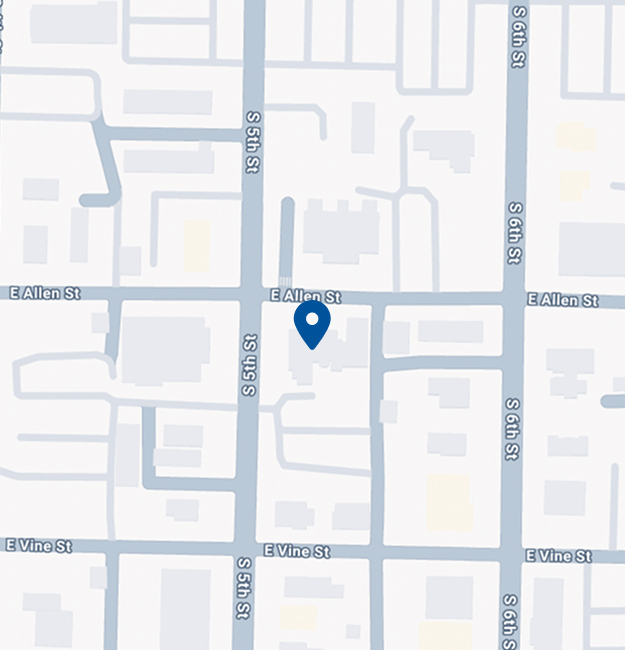
Address
Our offices are located at the corner of South Fifth Street and Vine, in the historic Mary Bryant Home for the Blind.