- Free Consultation: (217) 544-4057 Tap Here To Call Us














Social Media Evidence in Illinois: Posting Guns or Drugs


Last Reviewed & Updated: October 26, 2026
By: W. Scott Hanken | Former Sangamon County Prosecutor | Springfield Criminal Defense & Weapons Offenses Defense Attorney | Voted “Best Attorney” — Illinois Times Best of Springfield & State Journal-Register Reader’s Choice | Springfield, IL | Sangamon County | (217) 544-4057 | hankenlaw.com
In Illinois, a photo or video of you holding a gun or drugs can be used to charge you with possession, deny you pretrial release, revoke your probation, or increase your sentence. The State still must prove the object was real and that it was yours.
Bottom Line: A post is evidence, not a conviction. Police in Springfield and across Sangamon County watch Instagram, Snapchat, Facebook, and Telegram. With the right legal process, they can get your account records, timestamps, IP addresses, and sometimes location data. If they seize your phone, they may get far more. But a screenshot is not self-proving. The State has to authenticate it, prove the object meets the legal definition of a firearm or controlled substance, and tie it to you. The burden it must meet changes depending on where your case is. That is where the defense lives.
Charged because of a post? Call W. Scott Hanken, Attorney at Law at (217) 544-4057 before you delete anything or talk to police.
Can Police Really Charge Me Based on Something I Posted?
Yes. A post showing you with a firearm or drugs can start an investigation, support a search warrant, and become trial evidence. In more than 37 years of practicing law in Sangamon County, I have handled numerous cases where the charges were brought because a client posted a video or picture of himself in possession of a firearm. Often there was no traffic stop, no search, and no complaint until the post surfaced.
Local reporting shows how this unfolds. In one recent Springfield case, police said a woman reported a Snapchat video showing a man firing a handgun into the air on the Fourth of July. Officers obtained the video, went to the address referenced in it, and arrested him for reckless discharge, unlawful use of a weapon, and possessing a firearm without a FOID card. Those charges are allegations, and he is presumed innocent. The pattern is the point: the post came first, and the charges followed.
How Do Police Monitor Instagram, Snapchat, Facebook, and Telegram?
Most social media evidence reaches police through three doors.
- Public posts. Anything posted publicly, or to a story or channel others can screenshot, can be viewed and saved by an officer without a warrant.
- Tips. A former partner, a rival, a neighbor, or a parent screenshots the post and sends it in. Many cases start this way.
- Legal process to the platform. For records the public cannot see, police serve the company with a subpoena, court order, or search warrant.
Messages matter as much as photos. A chat saying “I got that” or “who needs weed, hit me” is often what turns a possession investigation into a delivery investigation.
What Can Police Get From Snapchat?
Snap’s law enforcement guide says that, outside of emergencies involving a threat of imminent death or serious injury, it discloses account records only in response to legal process under the federal Stored Communications Act. What police get depends on which kind of process they bring. I have personally handled cases where the State’s timeline and location evidence came from exactly these records.
| Legal process | What Snap can be compelled to produce |
|---|---|
| Subpoena | Basic subscriber information, such as usernames, email addresses, phone numbers, the account creation date, and IP addresses tied to logins and other account actions |
| Court order | Non-content records, such as logs showing who the account communicated with and when, friends lists, and device identifiers |
| Search warrant | Location data, to the extent available, and content still on Snap’s servers, including unopened Snaps, active Stories, and content saved to Memories |
| Preservation request | A freeze of existing records for up to 90 days, extendable once for another 90 days, while police seek a warrant or court order |
Timing is everything with Snapchat. According to Snapchat’s support page on deleting Snaps and Chats, its servers are designed by default to delete:
- A Snap once it has been viewed by all recipients.
- An unopened Snap after 31 days.
- A chat 24 hours after everyone in the conversation has viewed it, or 31 days after it was sent, whichever comes first.
- A Story when it expires, usually 24 hours after it is posted.
Users can change some of these settings, and a chat that someone saves, replies to, or reacts to can be kept longer. Snap generally does not have the photo or video of an already-viewed Snap to hand over. That is why police move fast with preservation requests, and why the phone itself often becomes the real target.
How Snapchat records establish time and place:
- Timestamps and logs. Snap records when account activity happens, including IP logs for logins and other account actions, and metadata about who communicated with whom and when.
- Location data. If location services are on and the user opted into Snapchat’s location features, Snap collects location data at various points, with retention periods that vary by purpose. Police need a search warrant for it, and Snap says it can produce available location data for the account as a whole but not location tied to a specific Snap Map post or message.
- IP addresses. Server logs record the IP address used at connection, which points to an approximate area or internet provider.
Content saved to Memories stays in Snap’s cloud backup until the user deletes it. Content saved in the encrypted “My Eyes Only” folder cannot be accessed or decrypted by Snap.
What Can Police Get From Instagram and Facebook?
Instagram and Facebook are both owned by Meta, and Meta publishes the legal process it requires. Under its law enforcement guidelines:
- Subpoena. A subpoena can compel basic subscriber records.
- Court order. An order under 18 U.S.C. § 2703(d) can compel non-content records, including message headers and IP addresses.
- Search warrant. A warrant based on probable cause is required for stored content, which Meta says may include messages, photos, videos, timeline posts, and location information. Meta also says it continues to provide message and call logs and IP data.
Encryption changes what a warrant can reach. Meta began making personal Facebook Messenger chats end-to-end encrypted by default in late 2023, and Meta cannot read the content of an end-to-end encrypted chat. Those messages may still be on the phones involved. Instagram direct messages are different: Meta ended its optional end-to-end encryption for Instagram DMs in May 2026, so Instagram messages are stored in a form Meta can access.
Instagram and Facebook evidence often needs no warrant at all. Every public post shows its date. Users routinely add location tags to posts, check in at businesses, and post stories from recognizable places. That is free evidence of where and when.
Deletion has a catch. Meta says it does not keep data for law enforcement unless it receives a valid preservation request before the user deletes the content. Police who see a post often send that preservation request immediately, which freezes the account records while they apply for a warrant.
Is Telegram Safer Than Snapchat From Police?
Not in the way most people think. Telegram and Snapchat are built on opposite ideas, and that changes what evidence exists.
| Feature | Snapchat | Telegram |
|---|---|---|
| Primary focus | Photos, videos, and visual filters | Cloud-based messaging, large groups, and file storage |
| Data persistence | Ephemeral by default; viewed Snaps delete, chats delete 24 hours after viewing, and Stories usually expire after 24 hours | Regular chats are stored in Telegram’s cloud and sync across devices until deleted |
| Group limits | Smaller group chats among friends | Groups of up to 200,000 members and channels with unlimited subscribers |
| Privacy and encryption | Notifies users when someone screenshots their content | Optional “Secret Chats” with end-to-end encryption and self-destruct timers; regular chats are not end-to-end encrypted |
Two facts matter most for a criminal case.
First, ordinary Telegram chats live in the cloud. Telegram describes itself as a cloud-based messenger with seamless sync, and only device-specific Secret Chats carry end-to-end encryption and self-destructing messages. A Secret Chat must be started manually. Most people never use one. A regular Telegram conversation about selling product can sit in the cloud, and on every synced device, until someone deletes it.
Second, Telegram changed its policy in September 2024. Its privacy policy now states that if it receives a valid order from judicial authorities confirming a user is a suspect in a case involving criminal activity that violates its Terms of Service, it may disclose that user’s IP address and phone number. A phone number and IP address are often all investigators need to identify the person behind an anonymous account.
Telegram’s large groups and channels are also used as drug “marketplaces.” Police have built cases by joining them, watching the menus, and arranging purchases with undercover officers. In one California case, a sheriff’s office reported that a teenager was allegedly running an online drug marketplace on Telegram and agreed to sell to an undercover agent. A channel with thousands of subscribers is not private. Any one of them can be an officer or an informant.
Are Snapchat Private Stories and Drug “Menus” Really Private?
No. Many people believe a Snapchat Private Story, or a “menu” posted for a selected list of buyers, is hidden from the public and from law enforcement. It is not.
A Private Story is visible to everyone the poster adds. That audience can include an informant, an undercover officer, a former friend, or a buyer who later cooperates. Any of them can screenshot it or record it with a second phone. A school resource officer in Arizona has publicly described dealers advertising product photos on their Snapchat stories.
A Story that disappears after 24 hours also leaves a trail. The logs and IP records described above can still be compelled with legal process, and a Story still posted can be obtained by warrant. A “private” menu offering product is the kind of evidence prosecutors use to prove intent to deliver.
What Can Police Get From My Phone Itself?
If police seize your phone and either unlock it or use forensic extraction tools, the picture changes. Data the platform deleted may still be sitting on the device.
- Cached data and thumbnails. Phone operating systems and app caches sometimes keep image thumbnails, logs, or temporary files longer than the platform’s servers do.
- Deleted data recovery. Forensic software can sometimes recover deleted app databases, chat fragments, or media stored in device backups such as iCloud or Google Drive.
- Screenshots and screen recordings. Anything saved to the camera roll or a cloud backup is fully accessible once the device is searched.
- Embedded metadata. Original photo and video files on the phone can carry the time the image was captured and, if location tagging was on, GPS coordinates.
- Carrier and cell-tower records. With a separate warrant to the cellular provider, investigators can cross-reference account activity with tower data to place the phone in an area.
A search of a phone requires a warrant in most circumstances. Whether that warrant was supported by probable cause, and whether the search stayed within its limits, are questions I raise in every Sangamon County case that turns on phone evidence.
What Is the Difference Between Actual and Constructive Possession in Illinois?
Illinois recognizes two kinds of possession. Actual possession means the item is physically on you. Constructive possession means you know the item is there and have the intent and capability to maintain control over it, even if you are not touching it. The Illinois Supreme Court has recognized both theories, along with joint possession. People v. Givens, 237 Ill. 2d 311, 335 (2010). Constructive possession requires both the intent and the capability to maintain control. People v. Frieberg, 147 Ill. 2d 326, 361 (1992).
A video of you gripping a pistol is an actual-possession case at the moment it was filmed. A video showing a gun on a coffee table in a room full of people is a constructive-possession case, and a far weaker one. Presence near contraband is not possession. Because Illinois recognizes joint possession, the State may argue that several people in a video all possessed the same gun. That argument still requires proof of knowledge and control for each person.
Statute Callout — Unlawful Possession of Weapons by Felons, 720 ILCS 5/24-1.1
Possessing any firearm or firearm ammunition after a felony conviction is unlawful. A first violation by someone not in custody is a Class 3 felony carrying 2 to 10 years. It becomes a Class 2 felony carrying 3 to 14 years for a second or subsequent violation, for a person on parole or mandatory supervised release, or for a person whose prior conviction is a forcible felony, a felony weapons or FOID Act offense, stalking or aggravated stalking, or a Class 2 or greater drug felony. Possession of a machine gun, or possession while wearing or carrying body armor, is a Class X felony. Each firearm or round of ammunition is a separate violation.
Does the State Have to Prove the Gun in My Video Was Real?
Yes. The State must prove the object meets the definition of a “firearm” under the FOID Act, 430 ILCS 65/1.1. That definition excludes pneumatic guns, spring guns, paintball guns, and BB guns that fire a single round projectile no larger than .18 inch in diameter or that have a maximum muzzle velocity under 700 feet per second. It also excludes guns that fire washable paint balls, signaling and safety devices, and certain antique firearms.
The State does not always need the physical gun. In People v. McLaurin, 2020 IL 124563, the Illinois Supreme Court held that a police sergeant’s testimony that she saw the defendant carrying a silver handgun was enough to prove a firearm, even though no gun was introduced into evidence at trial. The court relied on specifics. The sergeant was familiar with and trained in firearms, and she saw the gun in daylight from about 50 feet away with nothing blocking her view. Another officer also testified that a handgun matching her description was recovered under the van the defendant got into.
Those same factors are how a video should be tested. A phone video is a witness that cannot be cross-examined, so the questions shift to the recording itself:
- Resolution and compression. Platforms compress uploads. Fine details that separate a real pistol from an airsoft replica can be lost, such as barrel bore, markings, slide serrations, or whether there is an orange tip.
- Lighting and angle. Night footage, motion blur, and partial views make identification guesswork.
- Duration. A two-second clip in a moving car is not a 50-foot daylight observation.
- Props and replicas. Music videos and social content routinely use replica, airsoft, or rented prop guns. Many replicas are built to be visually indistinguishable on camera.
- Editing and AI. Filters, overlays, and AI-generated or AI-edited images are now easy to make. An unaltered original file is harder for the State to produce than most people assume.
When the State’s only proof of a “firearm” is a screen, an officer’s opinion about what is on that screen deserves the same scrutiny McLaurin applied to an eyewitness. Unlike in McLaurin, there may be no recovered gun to back it up.
Does the State Have to Prove I Made the Post?
Yes. Before a post comes in at trial, the State must authenticate it. In People v. Kent, 2017 IL App (2d) 140917, the appellate court reversed a first-degree murder conviction over a Facebook post. The post appeared on a profile named “Lorenzo Luckii Santos.” It was tied to the defendant only by his first name and nickname in the account name and a small photo that allegedly resembled him. The State offered no evidence he used that account. A name and a profile picture were not enough.
After Kent, the State typically tries to connect an account through platform records, IP logs, the phone itself, or a witness who saw the defendant use it. That is exactly why subscriber records, IP addresses, and phone extractions matter so much. Fake accounts, shared phones, and reposted content are real issues, not excuses.
Contact W. Scott Hanken, Attorney at Law at (217) 544-4057. Social media evidence has to be challenged early, before it is treated as settled fact.
How Do Burdens of Proof Make a Post More Dangerous?
This is the part most people miss. The same post is judged under different standards depending on where your case stands, and the lower standards are where a post hurts most.
| Stage | State’s burden | Rules of evidence | What a post can do |
|---|---|---|---|
| Pretrial detention hearing | Clear and convincing evidence (725 ILCS 5/110-6.1) | Do not apply; the State may proceed by proffer | Support an argument that you are a real and present threat |
| Trial | Beyond a reasonable doubt | Full rules, including authentication | Must be authenticated and must prove a real firearm or drug |
| Probation revocation | Preponderance of the evidence (730 ILCS 5/5-6-4(c)) | Relaxed, though you keep the right to confront and cross-examine witnesses | A gun photo can be enough to find a violation |
| Sentencing | Evidence must be relevant and reliable | Relaxed | Rap videos and gun photos offered in aggravation |
At a detention hearing, the State can describe your post through an officer’s summary rather than a sworn foundation. Detention is available only for certain charges, and the State must also prove that no conditions of release can mitigate the threat. At a probation revocation hearing, the question is only whether a violation is more likely than not. At sentencing, Illinois courts relax the ordinary rules of evidence and admit what is relevant and reliable. People v. Varghese, 391 Ill. App. 3d 866, 873 (2d Dist. 2009). A video that might never survive a trial objection can still decide whether you go home, stay on probation, or receive a longer sentence.
Can a Rap Video Be Used Against Me in Court?
It can, and in Sangamon County it has been. I have seen and handled cases where the basis of the charges, or the evidence offered in aggravation at sentencing, included individuals participating in rap videos displaying weapons.
The defense has real tools. In Dawson v. Delaware, 503 U.S. 159 (1992), the U.S. Supreme Court held that admitting evidence of a defendant’s membership in a prison gang at a capital sentencing hearing violated the First Amendment because the evidence had no relevance to the issues being decided. The Court also made clear there is no automatic bar: beliefs and associations can be considered when they are relevant. Dawson involved group membership, not music, but its reasoning carries over to rap videos and other expression. Abstract beliefs, associations, and artistic expression should not count as aggravation unless the State connects them to the offense or to a legitimate sentencing factor.
Illinois has not enacted special protection for creative expression. House Bill 3420 in the 103rd General Assembly would have presumed a defendant’s creative or artistic expression inadmissible. To overcome that presumption, the party offering it would have had to prove, by clear and convincing evidence, a literal meaning and a strong factual link to the charged crime. The bill died when that General Assembly ended in January 2025. Until something changes, the fight happens case by case, under relevance, reliability, and Dawson.
What Happens if I Message Someone About Selling Marijuana or Drugs?
Adult-use cannabis is legal to possess in Illinois within the Cannabis Regulation and Tax Act’s limits, but selling it without a license is not. SB 3222 (P.A. 104-0463) raised the legal possession limit for Illinois residents 21 and over to 60 grams of flower, with corresponding increases for concentrates and infused products. That change does not legalize any unlicensed sale, manufacture, or possession with intent to deliver. The Cannabis Control Act makes it a crime to manufacture, deliver, or possess with intent to deliver cannabis. Illinois defines “delivery” to include an attempted transfer, with or without payment. 720 ILCS 550/3(d). Controlled substances other than cannabis fall under 720 ILCS 570/401.
Messages offering to sell are often how the State proves intent to deliver. Pair those messages with a photo of packaged product and a scale, and a possession case becomes a delivery case. It does not matter whether the offer went out on Snapchat, Instagram, or a Telegram channel.
Statute Callout — Manufacture or Delivery of Cannabis, 720 ILCS 550/5
Last amended by P.A. 104-0463, effective June 12, 2026, which moved the line between the Class 4 and Class 3 felony tiers from 30 grams to 60 grams.
| Amount of cannabis | Offense class |
|---|---|
| Not more than 2.5 grams | Class B misdemeanor |
| More than 2.5 g, up to 10 g | Class A misdemeanor |
| More than 10 g, up to 60 g | Class 4 felony |
| More than 60 g, up to 500 g | Class 3 felony (fine up to $50,000) |
| More than 500 g, up to 2,000 g | Class 2 felony (fine up to $100,000) |
| More than 2,000 g, up to 5,000 g | Class 1 felony (fine up to $150,000) |
| More than 5,000 g | Class X felony (fine up to $200,000) |
What If Situations: Conditional Questions
What if the gun in my video was a prop or an airsoft replica?
The State must prove a firearm as the FOID Act defines it, and BB, pellet, and paintball guns that fall within the statutory size or velocity exclusions do not count. 430 ILCS 65/1.1. Under McLaurin, testimony about a gun can be enough, but only when the circumstances make the identification reliable. In Springfield music-video and social content, replica and rented guns are common. A compressed phone video rarely shows what separates a replica from a working firearm. If the State cannot produce the object or a reliable identification, that gap is a defense.
What if the video is old or was filmed somewhere else?
Possession charges are tied to a date and, for some offenses, a place. The felon-in-possession statute, for example, reaches possession on or about the person, on the person’s land, or in the person’s own abode or fixed place of business. 720 ILCS 5/24-1.1(a). A video reposted from two years ago, or filmed outside Illinois, may not prove the possession charged. Platform records cut both ways here. The same timestamps, IP logs, and embedded metadata the State uses can prove the clip predates the charged date or was recorded elsewhere.
What if I was in the video but someone else was holding the gun?
Being near a gun is not possessing it. Constructive possession requires proof that you knew about the item and had the intent and capability to control it. People v. Frieberg, 147 Ill. 2d 326, 361 (1992). In a group video where one person holds a firearm, the State must point to evidence beyond your presence. That might be you handling it later in the clip, or the gun being found in your home or car.
What if I am on probation and I post a picture holding a gun?
The State only needs a preponderance of the evidence to prove a probation violation. 730 ILCS 5/5-6-4(c). A clear photo may be enough even if it would face authentication and identification challenges at a full trial. If you are on probation or pretrial release in Sangamon County, assume any image of you with a weapon will be treated as a violation and reach a lawyer before the hearing.
What Should I Do If I Think a Post Is Being Used Against Me?
- Do not delete the account or posts without talking to a lawyer first. Deleting after you know about an investigation can create separate problems and can look like consciousness of guilt. It also may not work, because of preservation requests and phone forensics.
- Stop posting about the case, the people involved, or anything with weapons or drugs.
- Do not explain the post to police. “It was a prop” sounds harmless, but it admits you are the person in the video and that you held the object.
- Do not consent to a search of your phone. Politely say you want to speak with a lawyer.
- Write down where the video was filmed, when, who owned any item in it, and who else had access to your account or phone.
- Call a lawyer who knows how Sangamon County judges handle social media evidence at detention, revocation, and sentencing hearings.
Key Takeaways:
- A post is evidence, not a verdict. The State must authenticate it and prove what it shows.
- Snapchat, Instagram, Facebook, and Telegram all keep records police can obtain with the right legal process, from subscriber details and IP logs to stored content.
- Snapchat deletes viewed Snaps by default, but unopened Snaps (for up to 31 days), active Stories, Memories, and preserved records can still be reached. A seized phone may hold even more.
- Messenger chats are end-to-end encrypted by default; Instagram DMs are not.
- Regular Telegram chats live in the cloud. Only manually started Secret Chats are end-to-end encrypted.
- Snapchat Private Stories, drug “menus,” and Telegram channels are not hidden from law enforcement.
- Actual possession requires physical control. Constructive possession requires knowledge and the intent and capability to control. Presence is not enough.
- Detention, probation, and sentencing hearings use lower standards than trial, so posts do the most damage there.
- Cannabis delivery tiers changed June 12, 2026, under P.A. 104-0463.
Primary Authorities
- 720 ILCS 5/24-1.1, Unlawful possession of weapons by felons
- 430 ILCS 65/1.1, FOID Act definitions
- 720 ILCS 550/3 and 550/5, Cannabis Control Act
- 720 ILCS 570/401, Illinois Controlled Substances Act
- 725 ILCS 5/110-6.1, Pretrial detention
- 730 ILCS 5/5-6-4, Probation revocation
- 18 U.S.C. § 2703, Stored Communications Act
- People v. McLaurin, 2020 IL 124563
- People v. Kent, 2017 IL App (2d) 140917
- People v. Givens, 237 Ill. 2d 311 (2010)
- People v. Frieberg, 147 Ill. 2d 326 (1992)
- People v. Varghese, 391 Ill. App. 3d 866 (2d Dist. 2009)
- Dawson v. Delaware, 503 U.S. 159 (1992)
Frequently Asked Questions (FAQs)
A post alone can give police probable cause to investigate, obtain warrants, or arrest if it suggests unlawful possession, such as possession without a FOID card or after a felony conviction. Whether it supports a conviction depends on authentication, identification of the object, and proof of possession.
Not for public posts or content a friend shares with them. For private content held by the platform, police generally need a search warrant, and Snap also requires a warrant for location data. Lesser records, like subscriber information and IP logs, can be obtained with a subpoena or court order.
Usually not from Snap. Viewed Snaps are deleted from Snap’s servers by default, and chats are deleted by default 24 hours after everyone has viewed them. But the recipient’s screenshots, saved chats, Memories, and forensic recovery from a seized phone can still produce the image.
Only Secret Chats are end-to-end encrypted, and users must start them manually. Regular Telegram chats are stored in Telegram’s cloud. Since September 2024, Telegram’s policy says it may disclose a suspect’s IP address and phone number in response to a valid judicial order.
Often. Public location tags and check-ins show it directly. With a court order, police can get IP addresses. With a search warrant, Meta says it may disclose stored content including location information.
Not necessarily. Snap keeps Memories until the user deletes them, and both Snap and Meta honor preservation requests that arrive before deletion. Screenshots taken by others survive anything you delete, and forensic tools can sometimes recover deleted data from the phone.
No. Anyone you add can view, screenshot, or record it, including an informant or undercover officer. The platform’s logs can also be obtained with legal process.
It can be offered if the judge finds it relevant and reliable. Dawson v. Delaware involved gang membership rather than music, but under its reasoning, evidence showing only abstract beliefs or associations should not be considered when it has no connection to the crime or a legitimate sentencing factor.
Unlicensed sale of cannabis remains a crime, and Illinois defines delivery to include an attempted transfer. Messages offering product are commonly used to prove intent to deliver.
Sometimes. In People v. McLaurin, a trained officer’s eyewitness testimony was enough, backed up by a matching gun recovered nearby, even though no gun was introduced at trial. A video is judged on similar factors: clarity, distance, lighting, duration, and whether anything distinguishes a real firearm from a replica.
Further Reading
Practice Area
Related Articles
- Evidence Tampering in Illinois: Deleted Texts, Hidden Guns — Read this before you delete a post, a chat, or an account.
- Can Police Force You to Unlock Your Phone in Sangamon County? Face ID, Passcodes & Your Rights — If police have your phone, this covers whether they can make you open it.
- Probation Revocation in Springfield, Illinois: Your Questions Answered — What happens next if you are on probation when a post surfaces.
- Can a Convicted Felon Ever Legally Own a Firearm Again? — If a prior felony is what makes the gun in your video a crime.
- Marijuana and Guns in Illinois After U.S. v. Hemani — For posts that show cannabis and a firearm in the same frame.
- Do Police Need a Warrant to Search Flock Data in Illinois? — Another way police place you at a time and location without touching your phone.
Browse by Topic
- Weapons Offenses Defense
- Firearms / Gun Charges
- 4th Amendment / Search and Seizure
- Controlled Substances
Ready to Fight Your Weapons Charge in Springfield?
Call W. Scott Hanken at (217) 544-4057 or contact us online for a free consultation. We serve clients throughout Springfield, Sangamon County, and Central Illinois.
About the Author: W. Scott Hanken, Attorney at Law
Scott Hanken is a Springfield, Illinois criminal defense attorney with over 37 years of experience, including service as a former Sangamon County prosecutor. He has been voted Best Attorney by the Illinois Times and State Journal-Register, holds an Avvo 10.0 “Superb” rating, and has earned over 270 five-star Google reviews. He serves clients throughout Sangamon County and Central Illinois.
📍 1100 S 5th St, Springfield, IL 62703 | ☎ (217) 544-4057 | 🌐 hankenlaw.com
This article is for general educational purposes only and does not constitute legal advice. Every case is unique — contact an experienced Springfield criminal defense attorney for guidance on your specific situation.
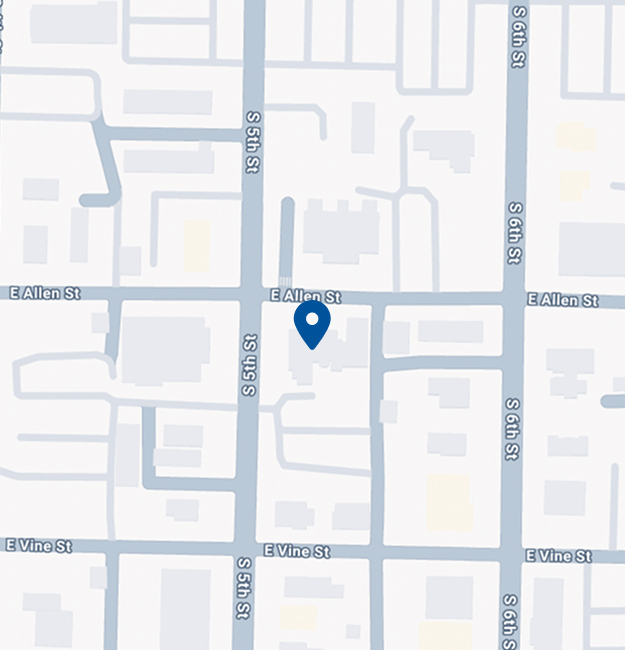
Address
Our offices are located at the corner of South Fifth Street and Vine, in the historic Mary Bryant Home for the Blind.