- Free Consultation: (217) 544-4057 Tap Here To Call Us











Illinois School Bus Stop-Arm Fines Jump to $300-$1,000 in 2027: Camera vs. Officer Tickets Explained



Last Reviewed & Updated: August 11, 2026
By: W. Scott Hanken | Former Sangamon County Prosecutor | Springfield Criminal Defense & Traffic Ticket Defense Attorney | Voted “Best Attorney” — Illinois Times Best of Springfield & State Journal-Register Reader’s Choice | Springfield, IL | Sangamon County | (217) 544-4057 | hankenlaw.com
Beginning January 1, 2027, an Illinois motorist caught by a school bus camera system passing a stopped school bus faces a fixed $300 civil penalty for a first offense and $1,000 for a second, up from the old $150 and $500 caps. That increase, created by House Bill 3175 (now Public Act 104-0587), applies only to camera-issued tickets under 625 ILCS 5/11-208.9. A violation an officer sees with their own eyes, charged under 625 ILCS 5/11-1414, already carries those same $300 and $1,000 mandatory minimum fines — a floor the court can add costs on top of but never go below — plus something the camera ticket does not: a mandatory license suspension and a permanent conviction.
Bottom Line:
If your ticket arrived in the mail with a photo of your license plate, you’re on the civil-penalty track — no points, no suspension, just a fixed fine that just got steeper. If a Sangamon County deputy or Springfield police officer pulled you over and wrote the citation on the spot, you’re on the harsher track, and that one already comes with a license suspension and a conviction that cannot be wiped off your record through supervision. Which track you’re on changes your entire defense.
Key Takeaways:
- Officer-issued ticket (625 ILCS 5/11-1414): $300 first offense / $1,000 second, a mandatory license suspension (3 months / 1 year), and a permanent conviction — no court supervision available.
- Camera ticket (625 ILCS 5/11-208.9, eff. 1-1-27): Same dollar amounts become mandatory civil penalties — no points, no suspension, no entry on the driving record.
- Springfield/Sangamon County: No camera enforcement program is currently in place here; stop-arm tickets in this area come from officer citations only.
What Does Illinois Law Require When You Meet or Pass a School Bus?
Under 625 ILCS 5/11-1414(a), a driver must stop before meeting or overtaking, from either direction, any school bus stopped to receive or discharge pupils. This isn’t limited to public roads — the statute reaches highways, roadways, private roads, parking lots, school property, and, in the statute’s own words, “any other location… including, without limitation, a location that is not a highway or roadway.” A driver who stops must stay stopped until the bus resumes motion, the driver is waved through by the bus driver, or the visual signals are no longer active.
There’s no time-of-day carve-out here. That’s a common point of confusion in Springfield, because a different law — the school zone speed limit statute — does apply only during specific school-day hours. The stop-arm law applies any time a bus is actually stopped and displaying its signals, whether that’s 7:15 a.m. on a school day or 4:45 p.m. after an activity bus run.
Is Passing a School Bus a Moving Violation in Illinois?
An officer-witnessed citation under 625 ILCS 5/11-1414 results in a mandatory conviction and a mandatory license suspension — real, serious consequences. But it does not carry points. Under 92 Ill. Adm. Code 1040.20(b), IVC 11-1414(a) is specifically listed among the violations that will not be assigned points; it’s entered on the driving record as a Type Action 93 or 94 “immediate action” item, and the Secretary of State imposes the suspension directly under 11-1414(f) rather than through Illinois’ point-accumulation system.
Whether that technically makes it a “traffic regulation governing the movement of vehicles” is a separate, contestable question — that link comes from bar-association commentary reasoning from the point system, not from a regulation that defines the phrase that way. What’s not in dispute: the conviction and suspension are real, and no points attach.
If the same conduct is instead captured only by an automated camera system under 625 ILCS 5/11-208.9, the statute is explicit that the resulting civil penalty is “not a violation of a traffic regulation governing the movement of vehicles” and does not go on the driving record at all — no conviction, no suspension, and, like the officer-issued citation, no points either way. What separates the two tracks isn’t points; it’s whether there’s a conviction, a suspension, and a permanent record.
What Penalties Apply If a Police Officer Issues You a Stop-Arm Ticket?
If an officer directly witnesses the violation and issues a Uniform Traffic Citation under 625 ILCS 5/11-1414, subsection (f) controls the penalty. A first conviction carries a mandatory minimum fine of $300, a 3-month license suspension, and court-ordered community service — the court can add costs and assessments on top, but cannot go below that floor. A second or subsequent conviction within five years carries a mandatory minimum fine of $1,000 and a 1-year suspension.
Rather than assigning points, the Illinois Secretary of State enters the conviction on your driving record as a no-points “immediate action” item under 92 Ill. Adm. Code 1040.20(b) (Type Action 93 or 94), and imposes the license suspension directly under 625 ILCS 5/11-1414(f) — the suspension doesn’t depend on, and isn’t calculated through, Illinois’ point system.
Statute Callout — 625 ILCS 5/11-1414(f)
“[A]ny person convicted of violating this Section… shall be subject to a mandatory fine of $300 or, upon a second or subsequent violation, $1,000, and community service in an amount set by the court.”
(Source: P.A. 101-55, eff. 1-1-20; 102-859, eff. 1-1-23.) These figures operate as a statutory floor; court costs and mandatory assessments are added on top and typically bring the total due above the base fine. Full text at ILGA.gov
This penalty structure has been in place since 2020 — it is not what House Bill 3175 changes.
What Changed Under House Bill 3175, and Who Does It Actually Affect?
HB 3175 — enacted as Public Act 104-0587 — amends a different section: 625 ILCS 5/11-208.9, which governs automated (camera) enforcement of the same stop-arm law. Under current law, a camera-issued civil penalty is capped at “not exceeding $150” for a first violation and “not exceeding $500” for a second. Starting January 1, 2027, those caps become fixed mandatory amounts — $300 first offense, $1,000 second or subsequent — matching the officer-issued fine’s dollar figures for the first time, though the two remain legally distinct penalties.
HB 3175 also shortens the administrative clock: notice must go out within 30 days after the municipality or county confirms the vehicle owner’s identity, rather than 30 days after the Secretary of State makes that identification, with a 90-day outer deadline either way. It further adds a rebuttable presumption — codified as new subsection (e-5) — that the bus was properly stopped and signaling when the recorded images show both an activated stop arm and an activated electronic indicator.
Statute Callout — 625 ILCS 5/11-208.9(k), as amended effective January 1, 2027
The motor vehicle owner is subject to a mandatory civil penalty of $300 for a first violation, or $1,000 for a second or subsequent violation, when the vehicle is recorded by an automated traffic law enforcement system and the driver did not also receive a Uniform Traffic Citation. Unlike the officer-issued fine, this is a fixed administrative amount, not a floor with court costs layered on top — though the statute also allows an additional penalty of up to $100 if the original civil penalty isn’t paid in a timely manner.
The camera-based civil penalty remains legally distinct from the officer-issued ticket in one important way that HB 3175 does not touch: it is still “not a violation of a traffic regulation governing the movement of vehicles” and “may not be recorded on the driving record of the owner.” No points, no suspension — just a bigger bill.
Does Springfield or Sangamon County Use School Bus Cameras?
Not that our research turned up as of this writing. Springfield District 186 has invested heavily in physical stop-arm extensions — locally made BusGates hardware first piloted on 20 of the district’s roughly 190 buses in October 2023 with a LIUNA donation, then expanded fleet-wide to the remaining 170 buses in 2024 — but that’s a visibility upgrade, not a camera enforcement system. Automated camera enforcement under 625 ILCS 5/11-208.9 requires a municipality or county to first pass an enabling ordinance, after which a local school board can opt in through an intergovernmental agreement. Until Springfield or Sangamon County takes that step, a stop-arm ticket here is far more likely to come from an officer’s direct citation — the track with the license suspension attached, not the civil-penalty track HB 3175 is raising.
School Bus Stop-Arm Ticket in Springfield, IL — What Happens Next?
An officer-issued citation will list a court date. Sangamon County traffic matters are heard at the Sangamon County Circuit Court, 200 S. 9th Street in Springfield, where courtrooms are spread across the 5th, 6th, and 7th floors of the county building — posted directories and video monitors point you to the right room. You can pay many petty traffic tickets online or by mail through the Circuit Clerk’s e-pay system without appearing — but doing so is treated as a guilty plea. For most tickets, that just means a conviction and points. For a stop-arm citation, it means locking in the mandatory license suspension automatically, with no supervision option available to soften the outcome. Because there’s no “easy” resolution built into this particular charge, it’s worth talking to an attorney before your court date rather than defaulting to paying online.
Can You Get Court Supervision for a School Bus Stop-Arm Ticket?
No. Illinois law bars court supervision for a Section 11-1414 violation under 730 ILCS 5/5-6-1(f)(1). That makes this one of a small handful of Illinois traffic offenses where a guilty finding cannot be kept off your record through supervision — the court must enter a conviction. In 37+ years of defending traffic and criminal matters in Sangamon County, this is the detail that surprises drivers most: they assume a clean record and a good explanation will get them supervision the way it would on a speeding ticket. It won’t here, no matter how sympathetic the facts.
What About These Common Complications?
What if I Was Caught by a Camera, Not a Police Officer?
The rulebook everyone assumes applies — license points, a suspension, a permanent conviction — simply doesn’t attach to a camera-only ticket. Under 625 ILCS 5/11-208.9(k), that penalty is civil, kept separate in the statute’s own language from “a violation of a traffic regulation governing the movement of vehicles.” There’s also a built-in defense against double punishment: if you already received a Uniform Traffic Citation from an officer for the same incident within one-eighth of a mile and 15 minutes of when the camera recorded it, that’s an explicit defense to the civil penalty under subsection (i)(2). Since Sangamon County doesn’t currently run this camera program, this scenario is more likely to come up for a Springfield-based driver who was ticketed while passing through a county that does use the technology.
What if the Stop Arm Never Extended or the Lights Weren’t Flashing?
The statute itself builds in this defense. Under 11-208.9(i)(3), a court or hearing officer may consider evidence that the visual signals required by Sections 12-803 and 12-805 “were damaged, not activated, not present… or inoperable.” The same logic applies in an officer-witnessed case: if the stop arm never extended and only the amber (not red) warning lights were on, the driver may not have been legally required to stop at all, since 11-1414(a) ties the stop requirement to the signals actually “in operation.” This is fact-intensive — it often comes down to dashcam footage, bus camera footage, or the officer’s own report — and it’s one of the first things I look at when a client brings in a stop-arm citation.
What if I Was on the Opposite Side of a Divided Highway?
Subsection (e) exempts drivers on a highway with four or more lanes, with at least two lanes carrying traffic in the opposite direction, from stopping when the school bus is on the opposing roadway. The same exemption applies to a controlled-access highway when the bus is stopped in a loading zone where pedestrians aren’t permitted to cross. On some of Springfield’s wider four-lane arterials, this exemption is the difference between a valid stop and a valid defense.
Can I Fight a School Bus Camera Ticket in Illinois?
Yes. The notice itself is required to tell you that you can either pay the civil penalty or contest it — in court, by mail, or through an administrative hearing, per 625 ILCS 5/11-208.9(e)(10). Available defenses under subsection (i) include: the vehicle or its plates were stolen, or the vehicle was hijacked, before the violation and that was reported to law enforcement; the required visual signals were damaged, not activated, not present, or inoperable; the driver already received a Uniform Traffic Citation for the same incident within one-eighth of a mile and 15 minutes; and any additional defense allowed by local ordinance. Because this penalty is civil rather than criminal, the stakes of losing are financial only — no points, no suspension — but starting in 2027, the amount on the table doubles for a first offense and triples for a second.
How Does a Stop-Arm Conviction Affect Your Driver’s License and Insurance?
| Officer-Witnessed Ticket (625 ILCS 5/11-1414) | Camera Civil Penalty (625 ILCS 5/11-208.9), eff. 1-1-27 | |
|---|---|---|
| Legal nature | Petty offense / criminal conviction | Civil penalty only |
| Liable party | The driver | The registered vehicle owner |
| First offense fine | $300 mandatory minimum (plus court costs) | $300 fixed civil penalty |
| Second/subsequent fine | $1,000 mandatory minimum (plus court costs) | $1,000 fixed civil penalty |
| License points | None — no-points “immediate action” item under 92 Ill. Adm. Code 1040.20(b) | None |
| License suspension | 3 months (1st); 1 year (2nd within 5 yrs) — imposed directly under 11-1414(f) | None |
| Court supervision available | No | Not applicable (civil, not criminal) |
| Appears on driving record | Yes, as a conviction | No |
| Community service | Court-ordered | No |
A conviction under 11-1414 can still affect insurance premiums, since insurers see a mandatory-conviction traffic offense with a license suspension attached — even though, unlike most moving violations, this one carries no points. A civil penalty under 11-208.9 generally does not affect insurance, precisely because the statute keeps it off the driving record entirely. For a broader look at how points accumulate toward suspension across different offenses, see our post on Illinois driver’s license points.
If your license is suspended as a result of a conviction, ordinary supervision-based options for keeping your driving privileges don’t apply here — but a Restricted Driving Permit may still be available depending on your circumstances and history.
What Defenses Are Available for a School Bus Stop-Arm Charge?
Beyond the inoperable-signal and divided-highway defenses above, common defense angles include challenging whether the bus was actually stopped for loading or discharging pupils (rather than, say, stopped in traffic), whether the driver had adequate time and visibility to react once the signals activated, and — for camera cases — whether the notice met the statutory timing and content requirements under 11-208.9(d) and (e). Because a conviction here cannot be resolved through supervision, an outright dismissal or a not-guilty finding is usually the only way to keep the offense off your record entirely.
Frequently Asked Questions (FAQs)
No. 625 ILCS 5/11-208.9(k) states explicitly that a camera-issued civil penalty “is not a violation of a traffic regulation governing the movement of vehicles” and does not appear on the driving record. An officer-issued citation under 625 ILCS 5/11-1414 is different: it’s a criminal conviction with a mandatory suspension — though, unusually, it doesn’t carry points either.
For an officer-issued ticket, the fine is already $300 for a first offense and $1,000 for a second or subsequent offense. For a camera-issued civil penalty, those same amounts become mandatory on January 1, 2027, under Public Act 104-0587, up from the current $150/$500 caps.
If convicted on an officer-issued ticket, yes — a mandatory 3-month suspension for a first offense, 1 year for a second within five years, imposed directly under 11-1414(f). A camera-only civil penalty does not carry a license suspension.
No. Illinois law specifically bars supervision for a Section 11-1414 violation under 730 ILCS 5/5-6-1(f)(1), so a guilty finding results in a permanent conviction.
That’s a civil penalty case under 625 ILCS 5/11-208.9, addressed to the vehicle’s registered owner rather than necessarily the driver, with no points or license consequences — only the fine itself.
A CDL is tied to you as a driver, not to the vehicle you were driving. A stop-arm conviction in a personal vehicle can still count toward the violation history that affects CDL eligibility, so commercial drivers should treat this citation with particular care.
Not as of this writing. Automated camera enforcement under 625 ILCS 5/11-208.9 requires a municipality or county to first pass an enabling ordinance, followed by a school board intergovernmental agreement — a step Springfield and Sangamon County haven’t taken. Until that changes, a stop-arm ticket here is far more likely to come from an officer’s direct citation under 625 ILCS 5/11-1414.
Further Reading
Practice Area
- Traffic Ticket Defense — How we defend moving violations, license suspensions, and mandatory-appearance traffic charges in Sangamon County.
Related Articles
- Illinois Scott’s Law — The Move Over Law: What Every Driver Needs to Know Before It Costs Them Thousands — The other Illinois traffic offense built around escalating mandatory fines and license consequences.
- Moving vs. Non-Moving Violations: What’s the Difference? — Background on the distinction that makes the stop-arm charge so unusual.
- 5 Steps to Contesting a Failure to Obey Traffic Signal Citation — A step-by-step look at fighting a citation rather than paying it.
- DUI Court Supervision Won’t Protect Your Illinois CDL — Why commercial drivers can’t rely on supervision to shield a license.
- 2026 Guide to Sangamon County DUI & Traffic Court — What to expect from a Sangamon County court appearance, including remote options.
- Traffic Ticket from a Fender Bender in Springfield? Here’s What Actually Happens Next — How a Springfield traffic case moves from citation to disposition.
Browse by Topic
- Traffic Ticket Defense articles
- Driving Record / Points
- License Suspension / Revocation
- Illinois Law Updates
Ready to Fight Your Traffic Case in Springfield?
Call W. Scott Hanken at (217) 544-4057 or contact us online for a free consultation. We serve clients throughout Springfield, Sangamon County, and Central Illinois.
About the Author: W. Scott Hanken, Attorney at Law
Scott Hanken is a Springfield, Illinois criminal defense attorney with over 37 years of experience, including service as a former Sangamon County prosecutor. He has been voted Best Attorney by the Illinois Times and State Journal-Register, holds an Avvo 10.0 “Superb” rating, and has earned over 270 five-star Google reviews. He serves clients throughout Sangamon County and Central Illinois.
📍 1100 S 5th St, Springfield, IL 62703 | ☎ (217) 544-4057 | 🌐 hankenlaw.com
This article is for general educational purposes only and does not constitute legal advice. Every case is unique — contact an experienced Springfield criminal defense attorney for guidance on your specific situation.
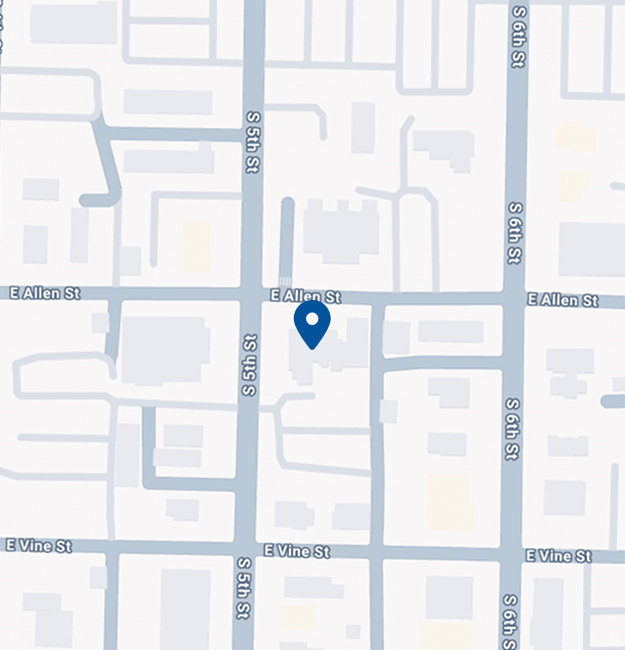
Address
Our offices are located at the corner of South Fifth Street and Vine, in the historic Mary Bryant Home for the Blind.