- Free Consultation: (217) 544-4057 Tap Here To Call Us















Geofence Warrants in Illinois After the Chatrie Ruling


Last Reviewed & Updated: November 20, 2026
By: W. Scott Hanken | Former Sangamon County Prosecutor | Springfield Criminal Defense Attorney | Voted “Best Attorney” — Illinois Times Best of Springfield & State Journal-Register Reader’s Choice | Springfield, IL | Sangamon County | (217) 544-4057 | hankenlaw.com
On June 29, 2026, the U.S. Supreme Court ruled in Chatrie v. United States that police conduct a Fourth Amendment search when they obtain a person’s cell-phone location history through a geofence warrant, even when the disputed request covered only two hours of data. The decision reshapes how courts, including those in Sangamon County, evaluate location-tracking evidence. It also lands as Springfield police keep relying on other tracking tools, from Flock license plate cameras posted around the city to ShotSpotter gunshot-detection sensors covering much of the east side and central neighborhoods.
Bottom Line: Chatrie does not make Flock cameras or ShotSpotter illegal, and it does not directly control either technology. But it changes the legal vocabulary defense attorneys use to challenge location and surveillance evidence. It also gives Illinois residents a clearer picture of where their privacy rights stand now, and where they are still being fought over in the courts.
If police used location data, camera evidence, or a gunshot-detection alert to build a case against you, the law in this area is moving fast. Call W. Scott Hanken, Attorney at Law at (217) 544-4057 for a free consultation before you talk to anyone else.
What Did the Supreme Court Decide in Chatrie v. United States?
Chatrie grew out of a May 2019 armed robbery of a credit union in Midlothian, Virginia. Investigators had no suspect, so they got a geofence warrant directing Google to turn over anonymized data for every device using its Location History service within 150 meters of the credit union. The window ran from 30 minutes before the robbery to 30 minutes after. Location History could place a phone within about 20 meters and recorded its position roughly every two minutes.
That first step returned 19 devices. Officers narrowed the list to nine and got a second round of data covering a two-hour window, this time without the geographic limit. They then requested account names for three devices. One of them belonged to Okello Chatrie.
The Supreme Court ruled 6-3 that obtaining Location History data this way is a Fourth Amendment “search,” even though a private company held the records and the time window was short. The government had argued that two hours was too brief to count as a search at all. Justice Kagan’s majority opinion rejected that argument: whether something is a search “does not depend on what it finds.” Justice Gorsuch concurred in the judgment, which made the vote 6-3. Once that kind of location database exists, the Court explained, police can chart the movements of many people, or just one, at the “click of a button.”
What the Court did not decide matters just as much. Because obtaining this data is a search, police generally need a warrant, with narrow exceptions such as genuine emergencies. But the Court did not decide whether the multi-step warrant used against Chatrie had enough probable cause and particularity. It sent that question back to the Fourth Circuit, which may also revisit the “good-faith exception.” That doctrine can keep evidence in when officers reasonably relied on a warrant, and it is how Chatrie’s own trial court refused to suppress the evidence in 2022. So the real-world effect of Chatrie is narrower than the headlines suggest. It settles that this is a search. It does not settle what a valid geofence warrant has to look like.
One more practical wrinkle: the opinion notes that in July 2025 Google began storing Location History on users’ own devices instead of its servers. Google says it can no longer respond to geofence warrants for that data. Police still have other sources of location information, though, and Chatrie’s reasoning will shape how courts look at them.
Case Callout — Chatrie v. United States: Chatrie v. United States, 609 U.S. 605, No. 25-112 (decided June 29, 2026), building directly on Carpenter v. United States, 585 U.S. 296 (2018). Carpenter held that the government’s collection of historical cell-site location records from a wireless carrier is a search that generally requires a warrant.
Does Chatrie Apply to Flock License Plate Cameras?
Not directly, and that distinction matters. Chatrie is about a searchable database of a phone’s private location history. Flock cameras are fixed roadside devices that photograph vehicles and license plates in plain view on public streets.
Most courts to rule on Flock-style camera networks have treated that as fundamentally different from tracking a phone. In January 2026, about five months before Chatrie, a federal judge in Virginia upheld Norfolk’s camera network in Schmidt v. City of Norfolk. The court found too little evidence that separate fixed cameras capture enough to reconstruct the whole of a driver’s movements, the way a phone that goes everywhere (including into homes and offices) can. That case is now on appeal to the Fourth Circuit. Virginia’s Court of Appeals reached a similar result in Commonwealth v. Church (2025), reversing a trial judge who had required a warrant.
The courts aren’t unanimous, though. On October 1, 2026, a federal judge in Oklahoma ruled in United States v. Kyle that a deputy’s warrantless Flock query, which pulled about a month of a driver’s travel history, was an unconstitutional search. The ruling relied in part on Chatrie. It is a single trial-court decision that doesn’t bind Illinois courts, but it shows the question is live.
Courts are now asking a version of the question Chatrie answered for phones: at what point does a large enough network of cameras, queried together, start to rebuild someone’s entire pattern of movement instead of catching them at a handful of separate spots? That question remains unsettled, and it is exactly the kind of argument a defense attorney should raise when Flock evidence shows up in a case file. We cover it in more depth in Do Police Need a Warrant to Search Flock Data in Illinois?
Does Chatrie Apply to ShotSpotter Gunshot Detection?
Even less directly. ShotSpotter is an acoustic sensor network that listens for gunfire and alerts police to a location. It is not a searchable record of anyone’s movements. The real legal fight over ShotSpotter isn’t whether using it is a “search” under Chatrie or Carpenter. It’s whether a ShotSpotter alert gives officers enough to legally stop someone.
The Seventh Circuit, the federal appeals court covering Illinois, addressed that question in a Peoria case. A divided panel upheld the stop of a car coming from the street named in two early-morning ShotSpotter alerts, relying on the alerts together with the other circumstances. But the court said it questioned whether a single ShotSpotter alert, standing alone, would amount to reasonable suspicion, and it left that question for another day.
That distinction shows up in real cases constantly. An officer who stops a car simply because it was near a ShotSpotter alert has a weaker legal position than one who can point to more facts, like erratic driving, flight, or a matching description. Keep in mind that Seventh Circuit decisions bind federal courts. Illinois state courts, including Sangamon County Circuit Court, treat them as persuasive but not binding.
Case Callout — United States v. Rickmon: United States v. Rickmon, 952 F.3d 876 (7th Cir. 2020). This Peoria, Illinois case held that a ShotSpotter alert combined with other specific facts supported reasonable suspicion for a stop. The court also questioned whether a single alert alone would be enough.
How Flock Cameras and ShotSpotter Compare to Geofence Warrants
| Technology | What It Tracks | Is Accessing It a “Search”? | Used in Springfield? |
|---|---|---|---|
| Geofence warrant (Google Location History) | A phone’s precise location history | Yes, per Chatrie, so a warrant is generally required | Not Springfield-specific. Google says a 2025 change means it can no longer answer Location History geofence requests |
| Flock license plate cameras | Vehicles passing fixed public camera locations | Generally no under most current case law, though at least one federal court has held otherwise | Yes. SPD operates Flock cameras around the city |
| ShotSpotter | Location and timing of detected gunfire | Not the main issue. The fight is over reasonable suspicion | Yes. SPD has used it since 2020, mainly on the east side and in central neighborhoods, and the city renewed the contract in October 2026 |
Does Illinois Law Give Sangamon County Residents More Protection?
Possibly, and this is where Illinois differs from most other states. The Illinois Constitution’s search-and-seizure provision doesn’t just mirror the Fourth Amendment. It goes further. Article I, Section 6 protects Illinois residents from “unreasonable searches, seizures, invasions of privacy or interceptions of communications by eavesdropping devices or other means.” The federal Constitution has no language like that.
In practice, Illinois courts interpret the search-and-seizure half of that provision in “limited lockstep” with federal Fourth Amendment law. That means Illinois courts largely follow the U.S. Supreme Court unless there is a specific reason to depart. But Illinois courts have read the separate privacy clause more broadly in some contexts. One example is bank records (People v. Nesbitt, 405 Ill. App. 3d 823 (2010)), which is precisely the kind of third-party information at the center of Chatrie and Carpenter. In decades of arguing suppression motions in Sangamon County Circuit Court, the pattern worth knowing is this: Illinois courts take that extra privacy language seriously, and it gives Illinois defense attorneys an argument that isn’t available everywhere.
Illinois has also passed its own law limiting how license plate reader data can be shared. Under 625 ILCS 5/2-130, those using automated license plate readers may not share that data with any state or local jurisdiction to investigate or enforce laws that restrict health care, including reproductive care, or that allow someone to be detained or investigated based on immigration status. Before an Illinois user shares the data with an out-of-state agency, it must get a written declaration that the data won’t be used for those purposes.
Statute Callout — 625 ILCS 5/2-130: 625 ILCS 5/2-130 (User of automated license plate readers; prohibitions), Public Act 103-540, effective January 1, 2024.
If location, camera, or gunshot-detection evidence appears in your Springfield or Sangamon County case file, call (217) 544-4057 before speaking with investigators.
What If Police Used This Kind of Evidence Against Me?
What if I was stopped because of a ShotSpotter alert alone?
A ShotSpotter alert by itself is weak legal ground for a stop. The Seventh Circuit has questioned whether a single alert is enough. If the police report doesn’t describe other specific facts, like your car matching a description, seeing you flee, or other suspicious behavior, the stop may be worth challenging in a motion to suppress.
What if Flock camera data from another department shows up in my case?
Ask where the data came from, how far back the search reached, and whether a warrant was obtained. Courts are more skeptical of a query that pulls weeks of travel history than of a single camera hit. If an Illinois agency shared the data, ask whether the sharing followed 625 ILCS 5/2-130. That law doesn’t say a violation automatically gets evidence thrown out, but how the data was handled can still matter to your defense.
What if the location data covers days or weeks, not hours?
Chatrie held that even two hours of location history is a search. The longer and more detailed the data, the stronger the argument that police needed a valid warrant. The next questions are whether they got one, whether it was specific enough, and whether the good-faith exception applies.
Frequently Asked Questions (FAQs)
No. Most current case law treats both technologies as lawful tools that don’t require a warrant for ordinary use. The landscape is shifting, though: in October 2026 a federal court in Oklahoma held that a warrantless search of a month of Flock travel history was unconstitutional.
Generally, Chatrie applies to cases still moving through the courts, including those on direct appeal, not to convictions that are already final. It may matter in some post-conviction proceedings depending on the case’s posture. Even where it applies, the good-faith exception may still allow evidence gathered under a warrant police reasonably relied on before the ruling.
It’s possible. Police can seek stored location data from tech companies and phone carriers with a warrant, and you may not learn about it until charges are filed. After Chatrie, obtaining that kind of location history is a Fourth Amendment search, so police generally need a warrant that meets probable cause and particularity requirements. Google says a 2025 change means it can no longer answer geofence warrants for its Location History data.
Do not discuss the case with police or on social media. Contact a criminal defense attorney who can request the underlying warrant, camera logs, or ShotSpotter records and evaluate whether they were obtained and shared lawfully.
ShotSpotter’s maker says its sensors are designed to capture loud, gunshot-like sounds. Even so, voices have occasionally been recorded, and prosecutors in other states have tried to use them. A California court admitted one such recording, while a Massachusetts court excluded one under that state’s wiretap law. This remains a developing area outside the scope of the Chatrie ruling.
Further Reading
Related Articles
- Do Police Need a Warrant to Search Flock Data in Illinois? — If Flock hits are part of your case, this is the deeper dive on whether officers needed a warrant to run them.
- Can Police Stop You for Being in a High Crime Area? — ShotSpotter stops usually happen in “hot spot” neighborhoods; this explains what location alone does and doesn’t justify.
- Police Drones and Surveillance in Springfield, Illinois: What Your Rights Are — and Why They Matter Right Now — Covers the next surveillance tool Springfield police are using and where Illinois law draws lines.
- Can Police Force You to Unlock Your Phone in Sangamon County? Face ID, Passcodes & Your Rights — Geofence data comes from your phone; this covers what happens when police want the phone itself.
- Springfield’s Police Transparency Dashboard: A Defense Tool — Shows how public SPD data can help test the surveillance evidence in your file.
Browse by Topic
Ready to Fight Your Criminal Charge in Springfield?
Call W. Scott Hanken at (217) 544-4057 or contact us online for a free consultation. We serve clients throughout Springfield, Sangamon County, and Central Illinois.
About the Author: W. Scott Hanken, Attorney at Law
Scott Hanken is a Springfield, Illinois criminal defense attorney with over 37 years of experience, including service as a former Sangamon County prosecutor. He has been voted Best Attorney by the Illinois Times and State Journal-Register, holds an Avvo 10.0 “Superb” rating, and has earned over 270 five-star Google reviews. He serves clients throughout Sangamon County and Central Illinois.
📍 1100 S 5th St, Springfield, IL 62703 | ☎ (217) 544-4057 | 🌐 hankenlaw.com
This article is for general educational purposes only and does not constitute legal advice. Every case is unique — contact an experienced Springfield criminal defense attorney for guidance on your specific situation.
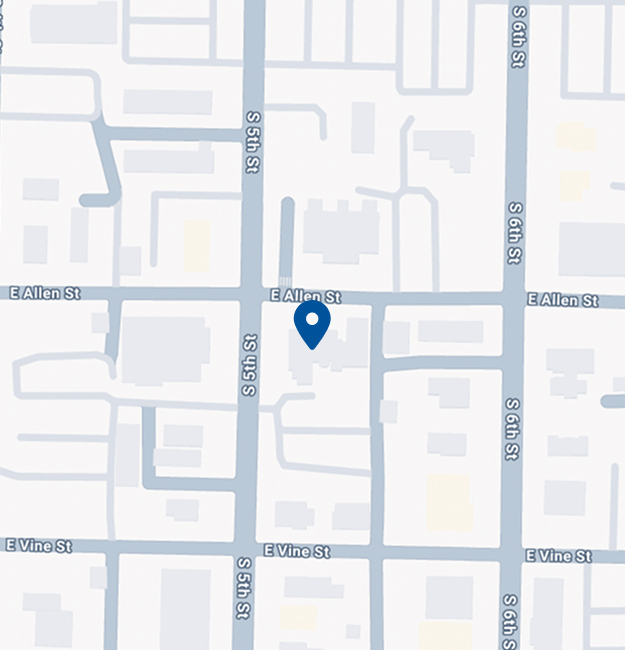
Address
Our offices are located at the corner of South Fifth Street and Vine, in the historic Mary Bryant Home for the Blind.